Mythos Changed the Math. Has Your Team's Operating Model Kept Up? 

Frontier AI is collapsing the time between vulnerability disclosure and real-world exploitation. Your detection and remediation workflows were built for a world that no longer exists.

Qualys gives security and IT operations managers the platform to work together, continuously detecting, accurately prioritizing, and continuously remediating risk before it becomes a problem. 

In 30 minutes, a Qualys expert will walk you through:

  • Window of exposure 
  • KEV coverage
  • Zero-day remediation

Request your custom briefing

Manage Risk in the Post-Mythos Era

Operationalize your transition to autonomous remediation with Qualys. 

Autonomous Validation Orchestration

Frontier AI: Accelerating Risks, Demanding Faster Responses

Frontier AI models like Claude Mythos are transforming cybersecurity, collapsing the timeline between vulnerability discovery and exploitation. AI now identifies and weaponizes vulnerabilities faster than traditional defenses, turning technical challenges into board-level risks.

For CISOs, the priority is clear: focus on the small fraction of confirmed, weaponized vulnerabilities that pose real threats. Acting quickly is no longer optional—it’s the only way to stay ahead of attackers in this accelerated landscape.

Autonomous Validation Orchestration

More Findings. Less Time. More Board Risk.

Mythos has turned vulnerability discovery into a continuous, automated race. What used to take weeks can now compress into hours, and the volume of disclosures keeps climbing. But the real concern for CISOs is not the flood of findings. It is the small number that are confirmed, weaponized, and reachable in your environment.

The window to act is shrinking. The question is whether your program was built to find signal in the noise before an attacker does it for you.

What is Mythos?

On April 7, 2026, Anthropic announced Claude Mythos Preview, a frontier AI model under Project Glasswing capable of autonomously discovering and exploiting software vulnerabilities. Released as a private beta with selected partners, its goal is to identify and remediate critical vulnerabilities in commonly deployed software before adversaries discover and exploit these.

The result is a new era of accelerated vulnerability discovery, driving a surge in disclosures, patches, and CVEs at a pace security teams have never had to manage before.

What is Changing?

Mythos marks a structural shift in vulnerability management: discovery is becoming continuous, automated, and massively scaled. Vulnerabilities that once took human researchers weeks or months to uncover can now be identified and exploited in hours.

This is compressing the exploitation window and accelerating disclosure cycles, creating a growing gap between “vulnerability found” and “risk actually remediated.” At the same time, the volume of findings is increasing dramatically, while only a small fraction of vulnerabilities are ever truly exploited.

Schedule a demo

The Current Situation:

The vulnerability volume is up, the remediation timelines are shorter and the handoffs between security and IT are still largely manual, creating a gap where more gets found than fixed, and neither team has full confidence in what's actually exploitable.

That misalignment isn't a people problem. It's an operating model problem. 

The Current Situation:

The vulnerability volume is up, the remediation timelines are shorter and the handoffs between security and IT are still largely manual, creating a gap where more gets found than fixed, and neither team has full confidence in what's actually exploitable.

That misalignment isn't a people problem. It's an operating model problem. 

The Problem Your Team Is Living Every Day

The vulnerability volume is up.

The remediation timelines are shorter.
The handoffs between security and IT are still largely manual.

The result is a gap that keeps growing:

Security finds more than IT can fix


IT fixes things security didn't flag as urgent


Neither team has full confidence in what's actually exploitable


Security finds more than IT can fix
IT fixes things security didn't flag as urgent
Neither team has full confidence in what's actually exploitable

That misalignment isn't a people problem. It's an operating model problem. 

The Problem Your Team Is Living Every Day:

The vulnerability volume is up.

The remediation timelines are shorter.

And the handoffs between security and IT are still largely manual. 

The Result Is a Gap That Keeps Growing:

Security finds more than IT can fix

IT fixes things security didn't flag as urgent

Neither team has full confidence in what's actually exploitable 

That misalignment isn't a people problem. It's an operating model problem. 

2026 Verizon DBIR: What the Data Says About Your Backlog

#1 Breach Vector

Vulnerability exploitation — the threat your backlog represents

43 Days Median Remediation Time

The window attackers are actively working inside

+50% Critical Vulnerabilities YoY

more findings, same team, same hours

Autonomous Remediation is the New Standard 

Security and IT operations need a shared operating model — one that replaces manual handoffs with continuous, automated workflows across detection, prioritization, and remediation.

This is the foundation of the Risk Operations Center (ROC) powered by Qualys.

icon

AI-Speed Detection

Periodic scans leave gaps between cycles. Qualys VMDR gives security and IT one current, real-time picture — now extended by InstaScan's minutes-from-disclosure scanless detection and Total AI 2.0's visibility into the business's AI footprint.

icon

Hyper-Prioritization

Not every vulnerability in the backlog is a real threat. Qualys ETM validates what's truly exploitable so both teams work from one evidence-based view. New agent-based TruConfirm now carries that validation inside the perimeter for full attack-path coverage.

icon

Zero-day Remediation

The handoff between security and IT is where time is lost. Qualys TruRisk Eliminate automates remediation end-to-end — now with wave-based patching guided by agent Sara and a reliability score blending global intelligence with your own telemetry, so IT moves faster with less risk.

What This Changes for Security Teams

Less time spent triaging noise 

More focus on real, exploitable risk 

Faster movement from detection to remediation 

Better alignment with IT execution workflows 

Related Resources

<p>Pivotal Moment: Capitalize on Mythos Hype to Fix Your Exposure and Vulnerability Management</p>
Report

Pivotal Moment: Capitalize on Mythos Hype to Fix Your Exposure and Vulnerability Management

<p>Learn How to Manage Risk in the Post-Mythos Era</p>
Webinar

Learn How to Manage Risk in the Post-Mythos Era

<p>Operationalize Autonomous Remediation for the Post-Mythos Vulnerability Surge</p>
One-pager

Operationalize Autonomous Remediation for the Post-Mythos Vulnerability Surge

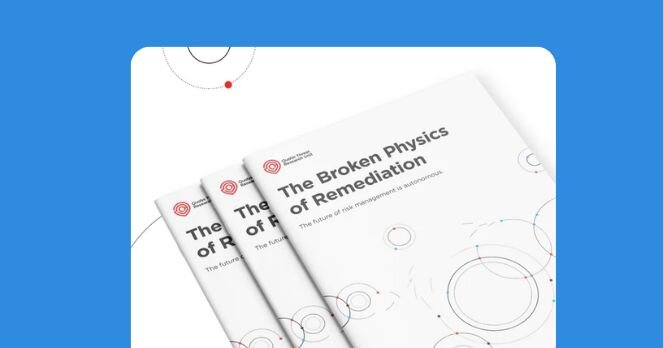
<p>The Physics of Remediation are Breaking</p>
Report

The Physics of Remediation are Breaking

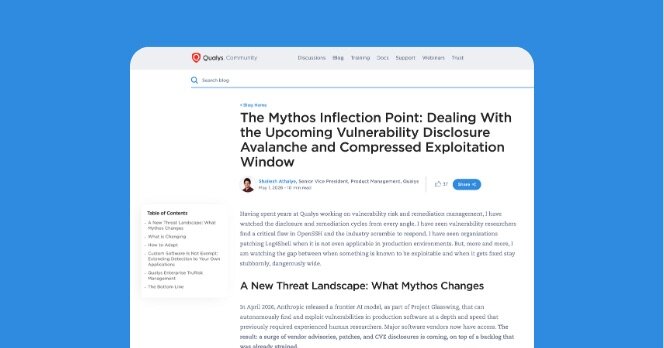
<p>The Mythos Inflection Point: Dealing With the Upcoming Vulnerability Disclosure Avalanche and Compressed Exploitation Window</p>
Blog

The Mythos Inflection Point: Dealing With the Upcoming Vulnerability Disclosure Avalanche and Compressed Exploitation Window

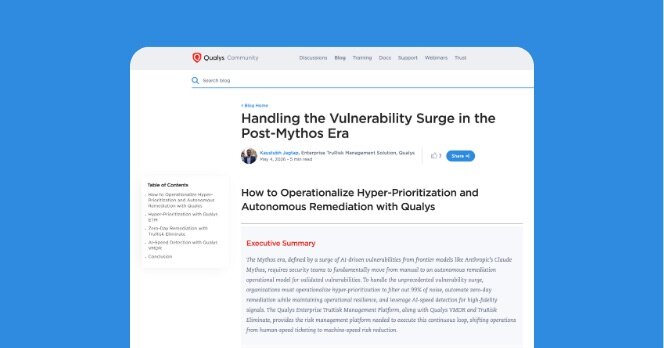
<p>Handling the Vulnerability Surge in the Post-Mythos Era</p>
Blog

Handling the Vulnerability Surge in the Post-Mythos Era

Frequently Asked Questions

What is Mythos?

Mythos is Anthropic’s frontier AI model, released in April 2026 as part of Project Glasswing. It autonomously identifies and exploits vulnerabilities in production software at scale — with over 99% of what it has discovered still unpatched and undisclosed.

Why is Mythos different from previous AI security tools?

Prior tools augmented human researchers. Mythos operates autonomously — scanning codebases, generating exploits, and surfacing zero-days without human input. Other frontier models are not far behind.

What is Project Glasswing?

Anthropic’s coordinated disclosure program, partnering with organizations to responsibly surface and mitigate the vulnerabilities Mythos discovers. 43% of CISA KEVs originate from Glasswing coalition partners — a disclosure surge is incoming.

Do I need to replace my existing tools?

No. The Qualys Enterprise TruRisk Platform aggregates findings from your existing third-party tools alongside Qualys detections — unifying your attack surface into a single prioritized queue.