Discover, track, and continuously secure Kubernetes and containers from build to runtime.
Continuous Vulnerability and Risk Assessment
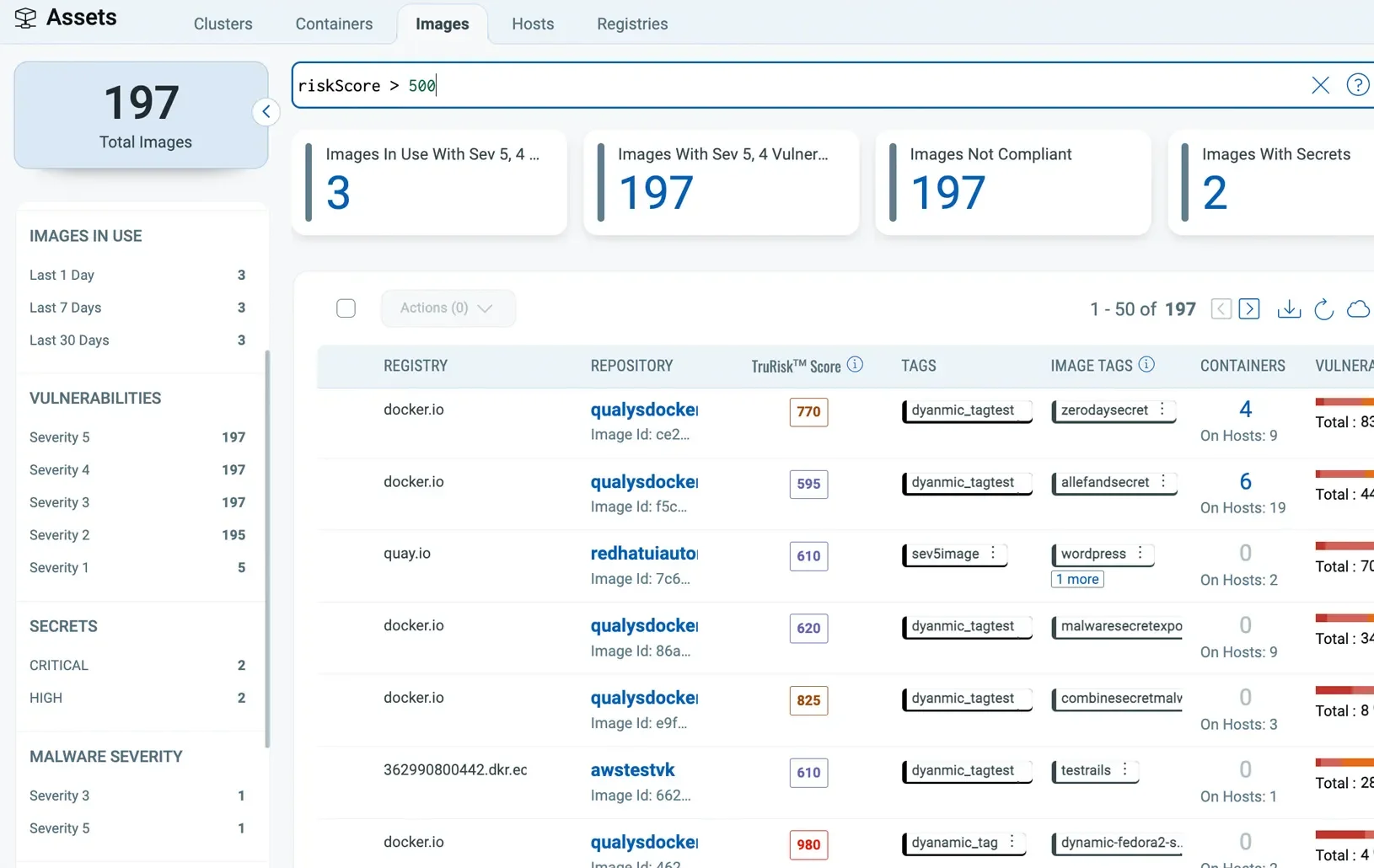
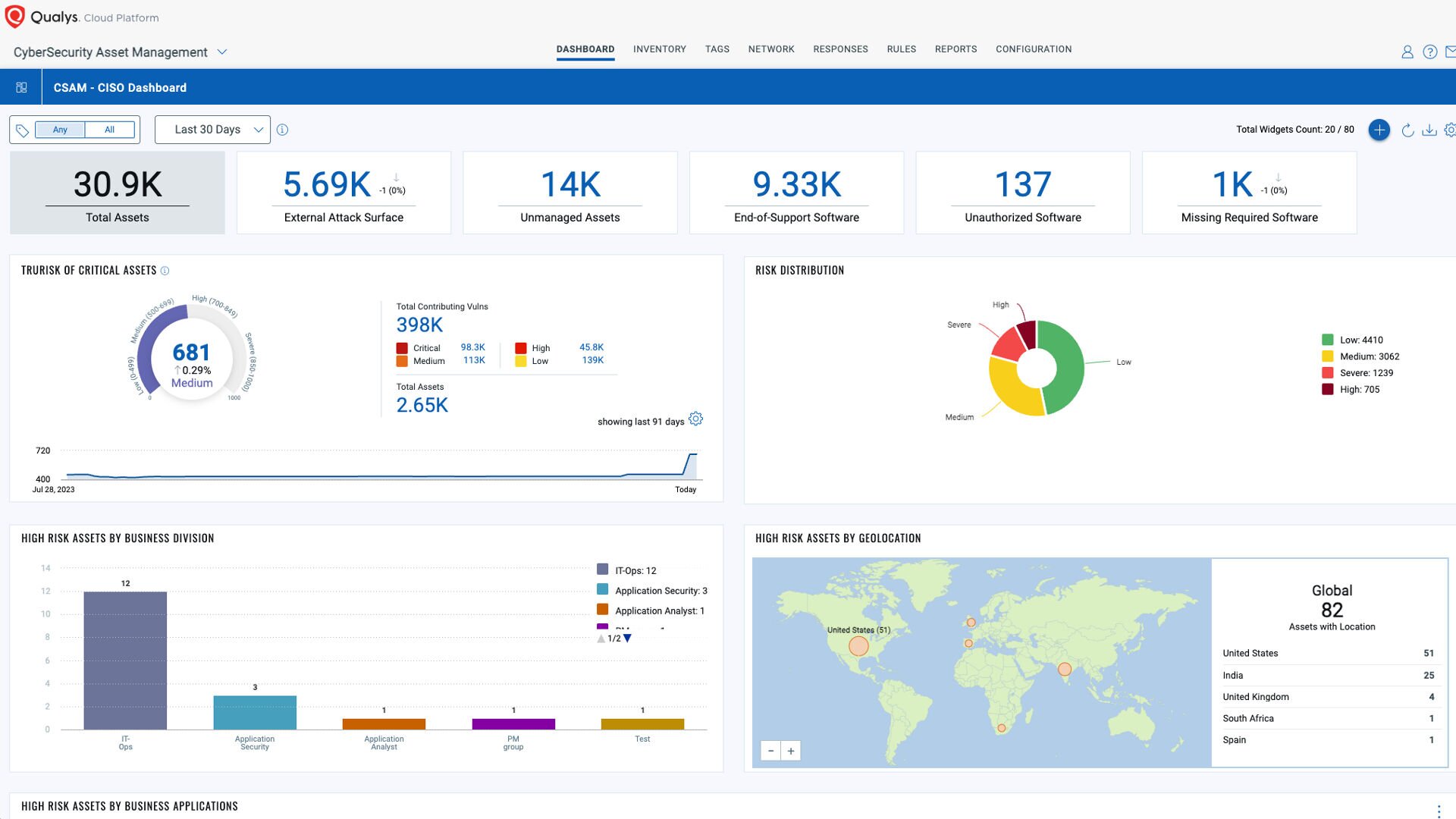
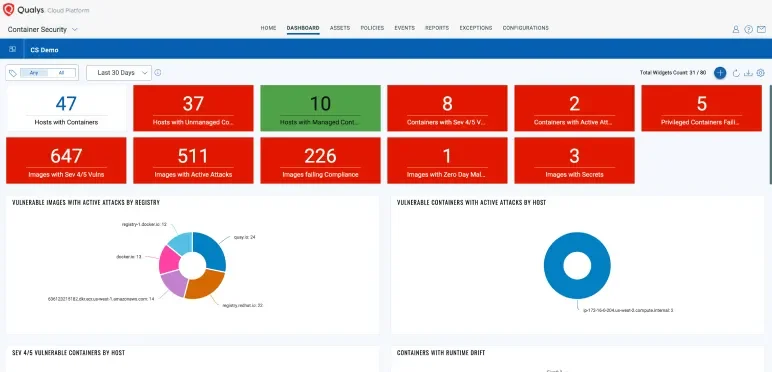
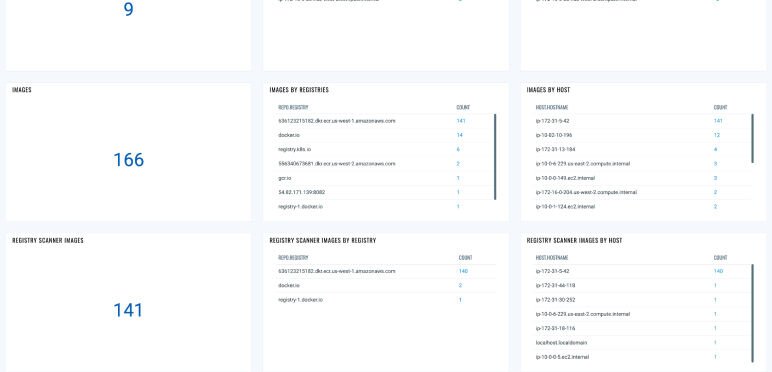
Continuously discover and assess images and containers across Kubernetes, Docker Hosts, Registries, and CI/CD Pipelines for vulnerabilities, malware, secrets, and SBOM. Prioritize real risk based on what's running.

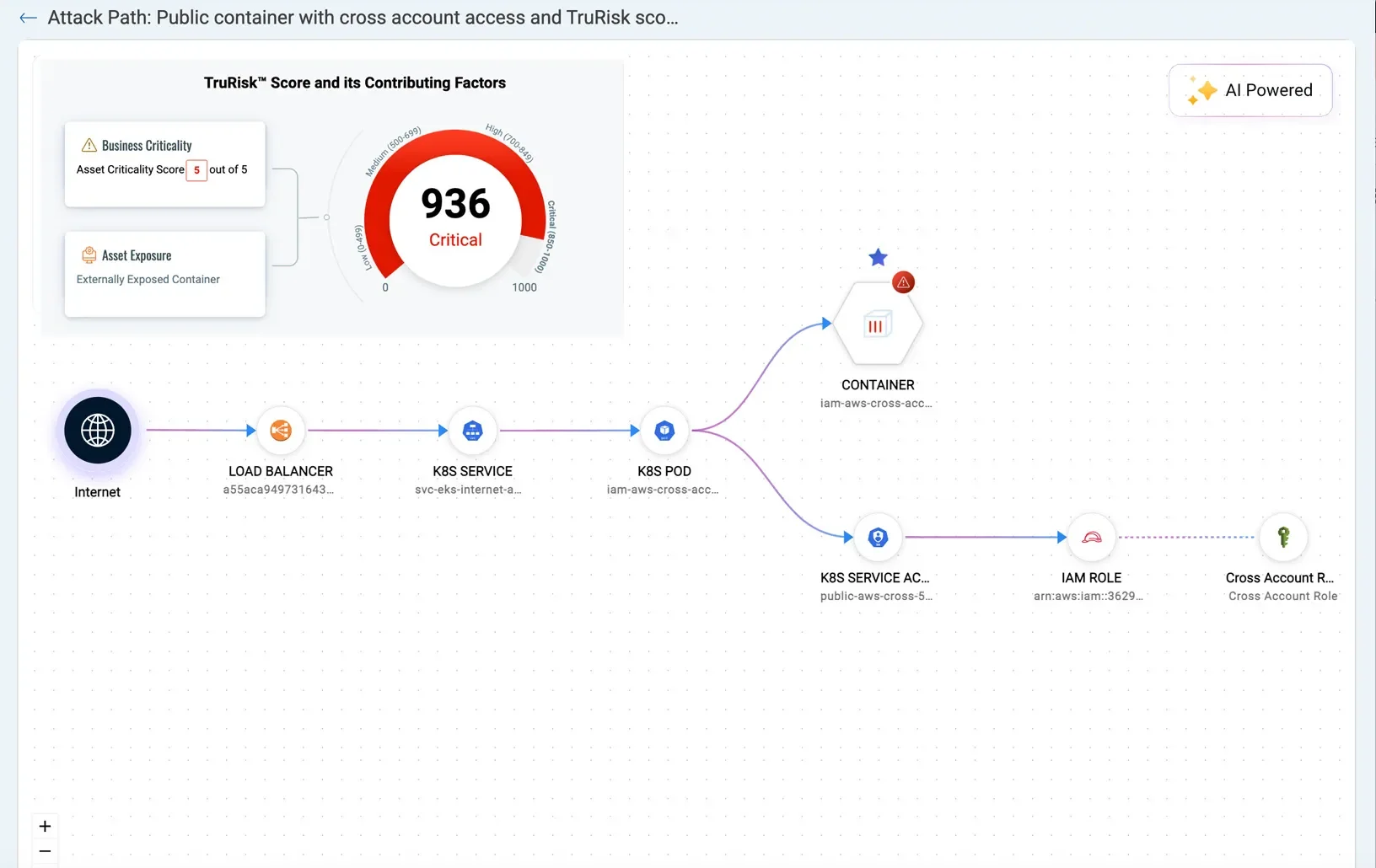
Proactive Risk Prioritization with Attack Path Analysis
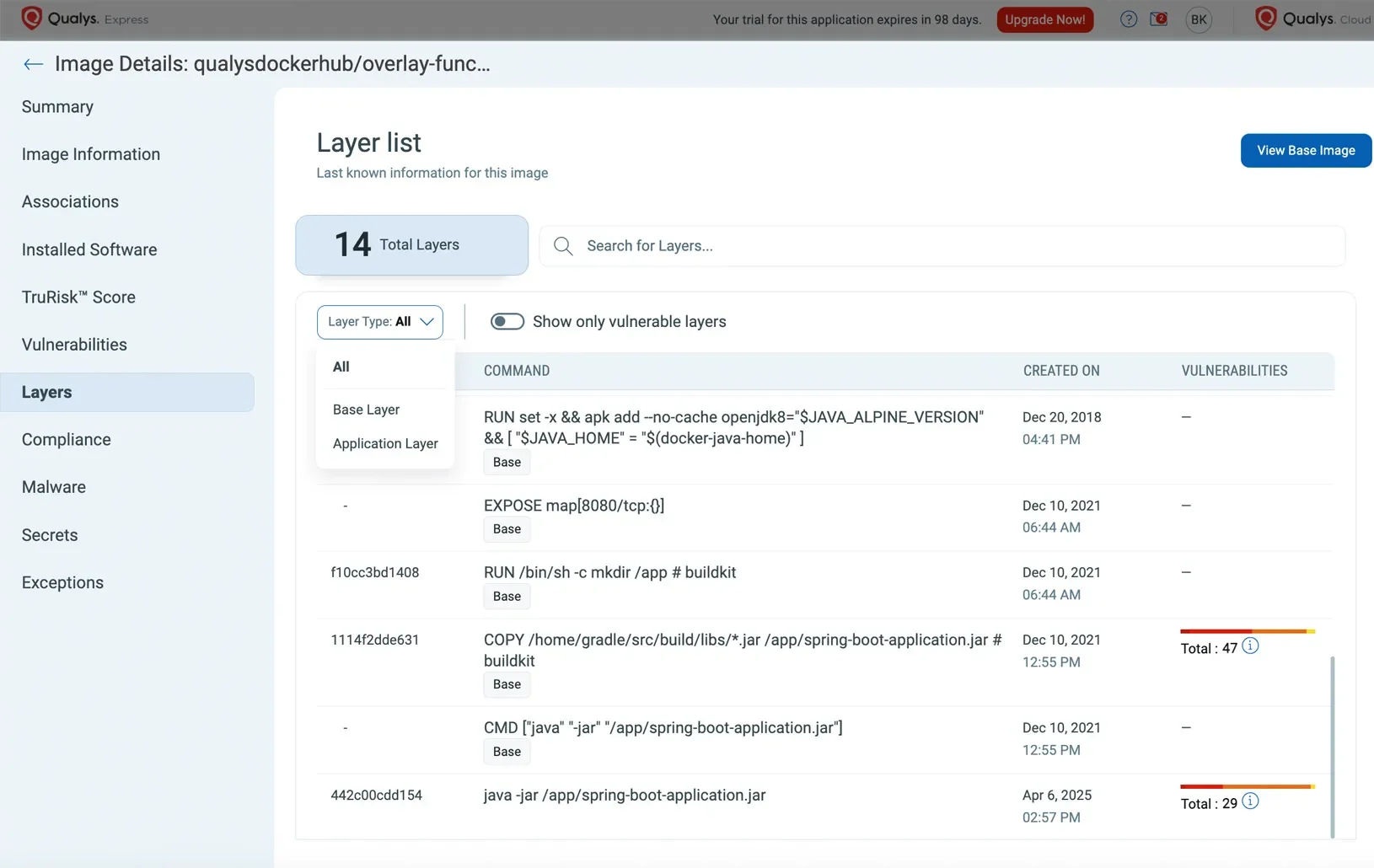
Image Layer Vulnerabilities and Remediation
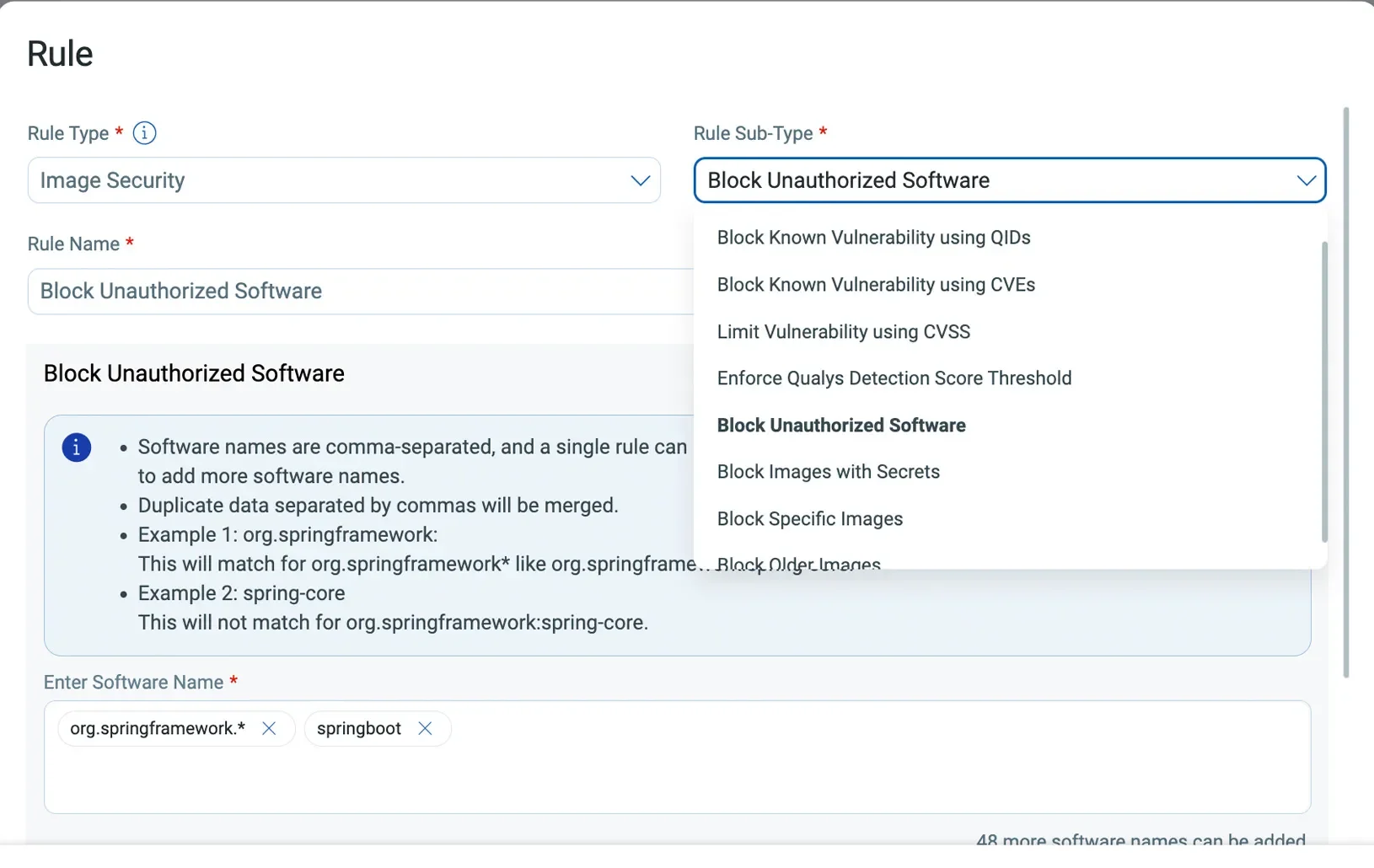
Admission Controls and Shift-Left Guardrails
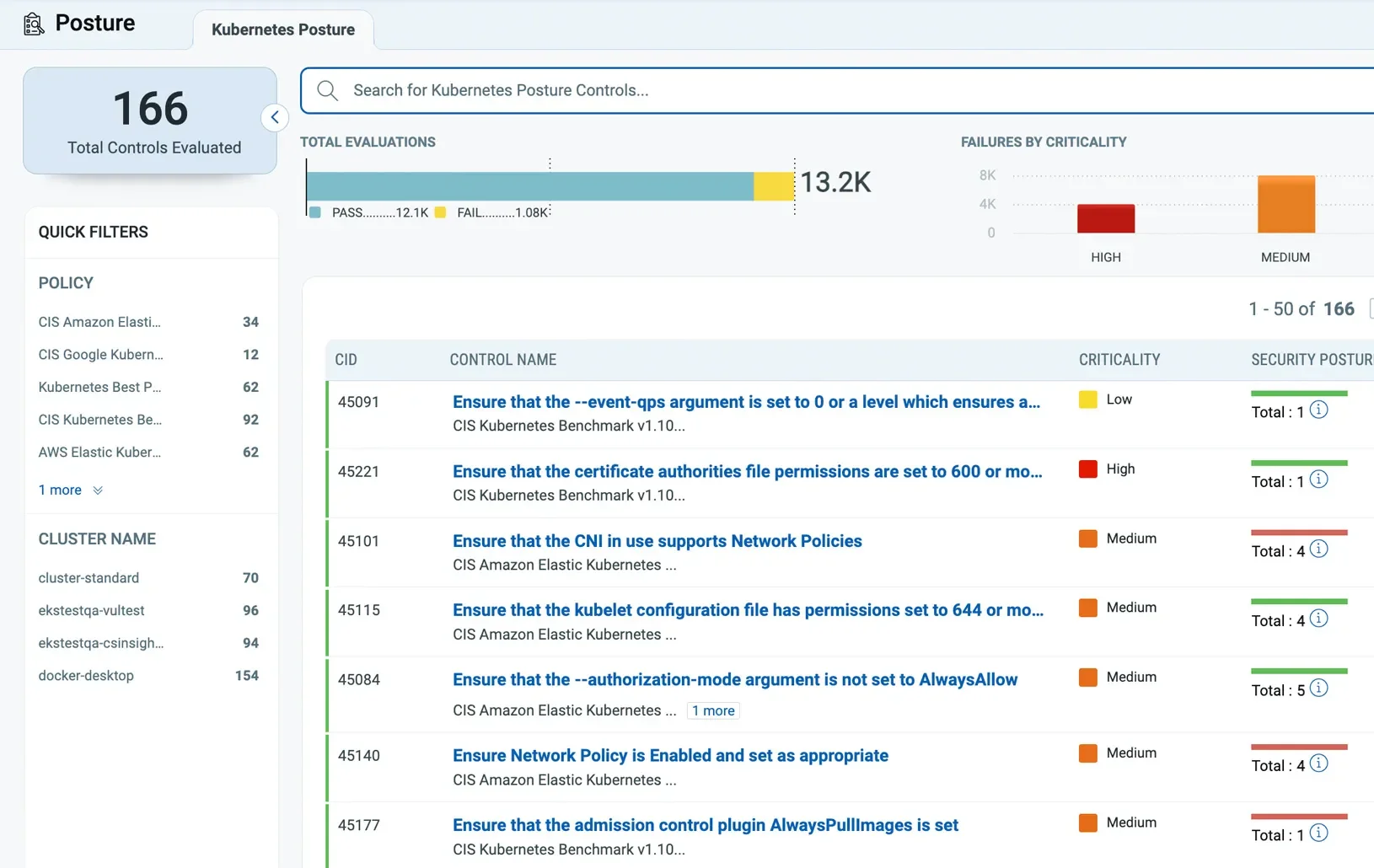
Continuous Kubernetes Security Posture Management (KSPM)

Deploying Qualys CDR for AWS and Azure with just a few clicks, in a matter of minutes, across multiple AWS and Azure subscriptions, was a game changer for our security team. We have a complex environment with many controls, and TotalCloud team worked with us on integration with existing solutions including Secure Web Gateways and integrated SIEM. With their engineering team, together made sure all the security finds were tightly integrated with our SIEM platform. I have rarely seen this level of competency and engagement effort from a vendor.

Qualys is enhancing its widely used platform to deliver visibility, context, speed, automation, and orchestration in a comprehensive solution to help organizations scale their security and compliance programs for modern software development. Qualys TotalCloud incorporates security into development workflows, enabling them to release secure, reliable code, while giving security teams the control and visibility they need to manage risk by reducing their attack exposure and rapidly responding to threats.

The Qualys approach [to runtime security] empowers security to follow the container image with built-in instrumentation, enabling visibility and behavior enforcement for running containers across all types of container infrastructure.

Bring rich vulnerability and risk prioritization context to your developers with QScanner - a self-serve CLI tool that can be integrated into any development build including GitHub Actions, Jenkins, and more. Block or audit insecure image builds with rich exception management.
Scan any Docker V2 Compliant registry including JFrog Artifactory, AWS ECR, Harbor.io, and more for vulnerabilities, software composition analysis, zero-day malware, and secrets. Apply Admission Controls to ensure only trusted registry images are deployed to production.
Continuously assess your containers in Kubernetes clusters and Docker hosts for key risks including vulnerabilities and misconfigurations. Prioritize with attack path context and business informed scoring. Detect malicious threats in real-time with eBPF Detections.
Gain deep visibility and security across on-premises container environments and managed containers across multiple cloud providers.
Introducing TotalCloud™ with TruRisk Insights
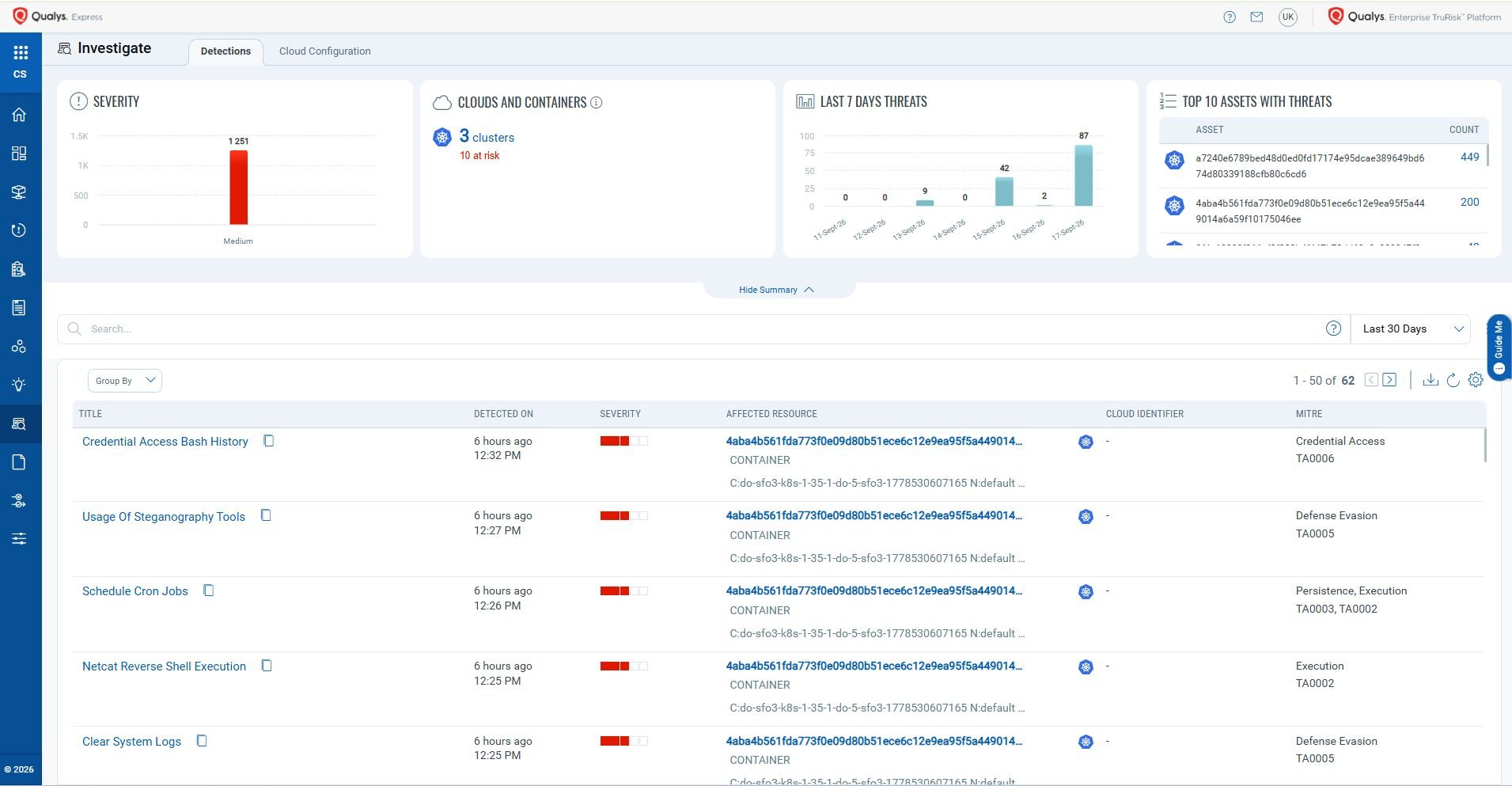
Detecting threats in running containers as they happen
Catching malicious activity like cryptominer executions the moment it starts, then tracing every file, process and network event behind it.
According to Red Hat’s State of Kubernetes Security Report 2024, 89% of organizations had at least one container or Kubernetes security incident in the past year
According to Deloitte, about 20-30% of security incidents occur due to bind spots in network and application visibility
The exploitation of vulnerabilities as an initial point of entry almost tripled from the previous year, accounting for 14% of all breaches, according to Verizon’s 2024 Data Breach Investigations Report
The Verizon Data Breach Investigations Report (DBIR) states that 13% of all data breaches analyzed were caused by misconfiguration errors

Containers and Kubernetes accelerate application delivery, but vulnerabilities, insecure configurations, excessive privileges, malicious software, and risky deployment settings can move from development into production just as quickly. Qualys helps secure the lifecycle from image creation and CI/CD through Kubernetes posture, deployment controls, and runtime.
Qualys supports container and Kubernetes security across major managed and self-managed environments, including Amazon EKS, Microsoft AKS, Google GKE/Autopilot, Red Hat OpenShift, and supported self-managed and hybrid Kubernetes deployments. This lets organizations apply a consistent security model across public cloud, private cloud, and on-premises clusters.
Qualys connects CI/CD and registry scanning, SBOM and software-composition analysis, Kubernetes posture, Admission Controller policy, deployed-image context, and runtime telemetry. This provides continuity from the artifact developers build to the container and cluster where that artifact ultimately runs.
Qualys Container Runtime Security monitors supported runtime activity such as process execution, file activity, network connections, and DNS behavior. Runtime detections can be enriched with image vulnerabilities, Kubernetes context, and threat intelligence to help teams investigate suspicious behavior quickly.
Qualys uses lightweight runtime telemetry, including eBPF-based visibility for supported Linux and Kubernetes environments, to observe process, file, network, and other workload activity without requiring application code changes or sidecars in every container.
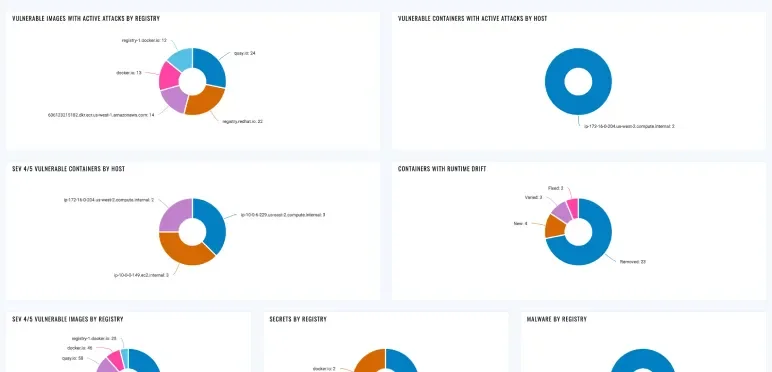
Yes. Runtime drift identifies behavior or software that differs from the expected container image or deployment state, helping teams detect unexpected processes, modified files, newly introduced binaries, or other unauthorized changes after deployment.
Yes. Qualys combines Kubernetes posture controls that identify risky privilege and host-access settings with runtime detections for suspicious behavior. This helps teams address both the conditions that make escape possible and evidence of exploit activity at runtime.
Yes. Qualys runtime capabilities can monitor supported file activity and integrity changes in containerized workloads, helping teams identify unauthorized modifications and support security and compliance requirements such as PCI DSS.
Qualys runtime-security policies can support response actions for selected threats, including containment-oriented actions such as blocking, isolating, or terminating supported malicious activity or workloads. Response can also be integrated with broader investigation and automation workflows.
Yes. Qualys QScanner can bring software-composition and dependency assessment into development workflows before an image is pushed to a registry. This helps teams identify vulnerable open-source components and generate software inventory earlier, then maintain continuity as the same software moves into the built image and runtime.