Keep fast-moving AI adoption under control. Prove your AI governance works.
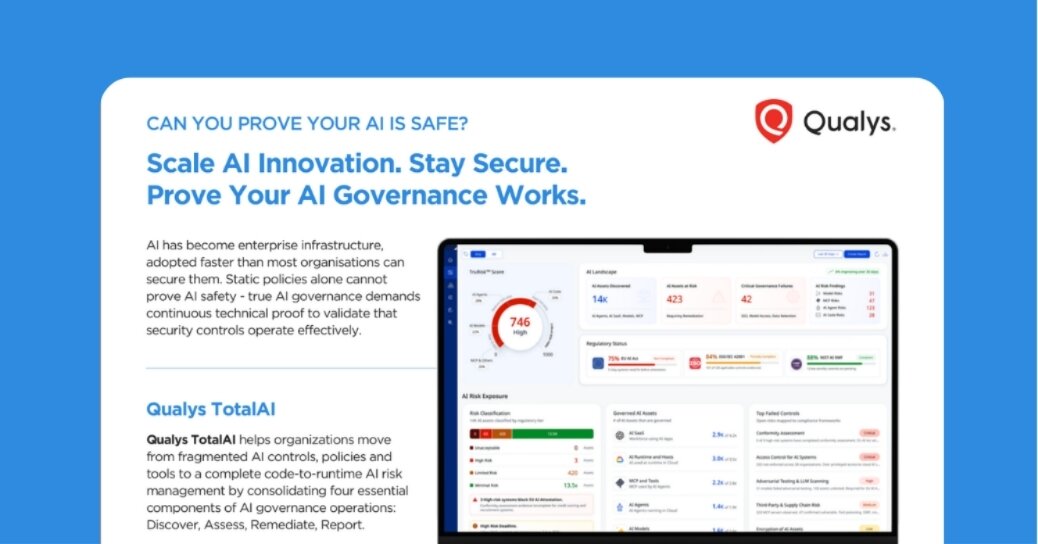
Qualys TotalAI unifies AI discovery, assessment, remediation, and governance in one solution to bring AI under control and address governance gaps from rapid AI adoption. It answers four critical questions for security leaders and regulators: Where is AI running? Is it safe from leaks? What can AI agents access? Can you prove controls work? TotalAI turns AI security evidence into a repeatable AI governance.
Eliminate Shadow AI Across the Enterprise
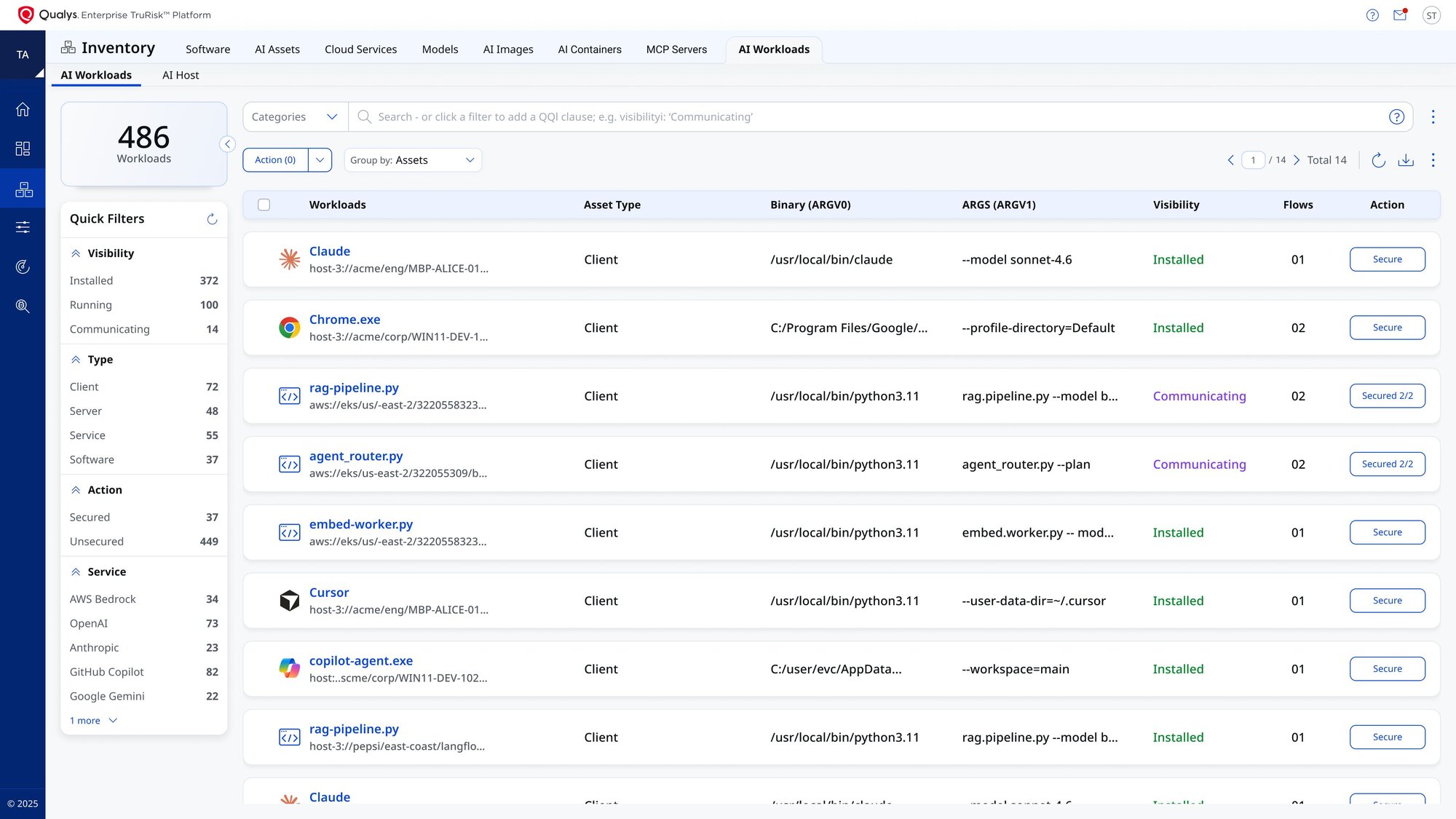
Discover sanctioned and shadow AI across cloud services, SaaS, GPUs, AI agents, models, MCP servers, host, containers, AI code, development pipelines and browser-based AI, so teams can establish a trusted inventory baseline that separates approved from unapproved usage.
Secure & Scale AI Without Slowing Innovation
Comprehensive AI Lifecycle Risk Management And Governance For AI Security & Operational Control.
Orchestration Engine Powering TotalAI

Contextual TruRisk™Scoring
Autonomous Remediation
Governance and Compliance
BUILD
Code & Supply Chain
DEPLOY
Inventory & Posture
TEST
Red Teaming
RUN
AI Runtime Security
CONSUME
AI SaaS Security
Unified Underlying Telemetry, Cloud Intelligence, and Sensor Network
Cloud Agents
Cloud Connectors
VMDR / CSAM
Scanners
Container Security +eBPF
Browser Plugin
SaaS Connectors
Take Control of Your AI Compliance & Audit
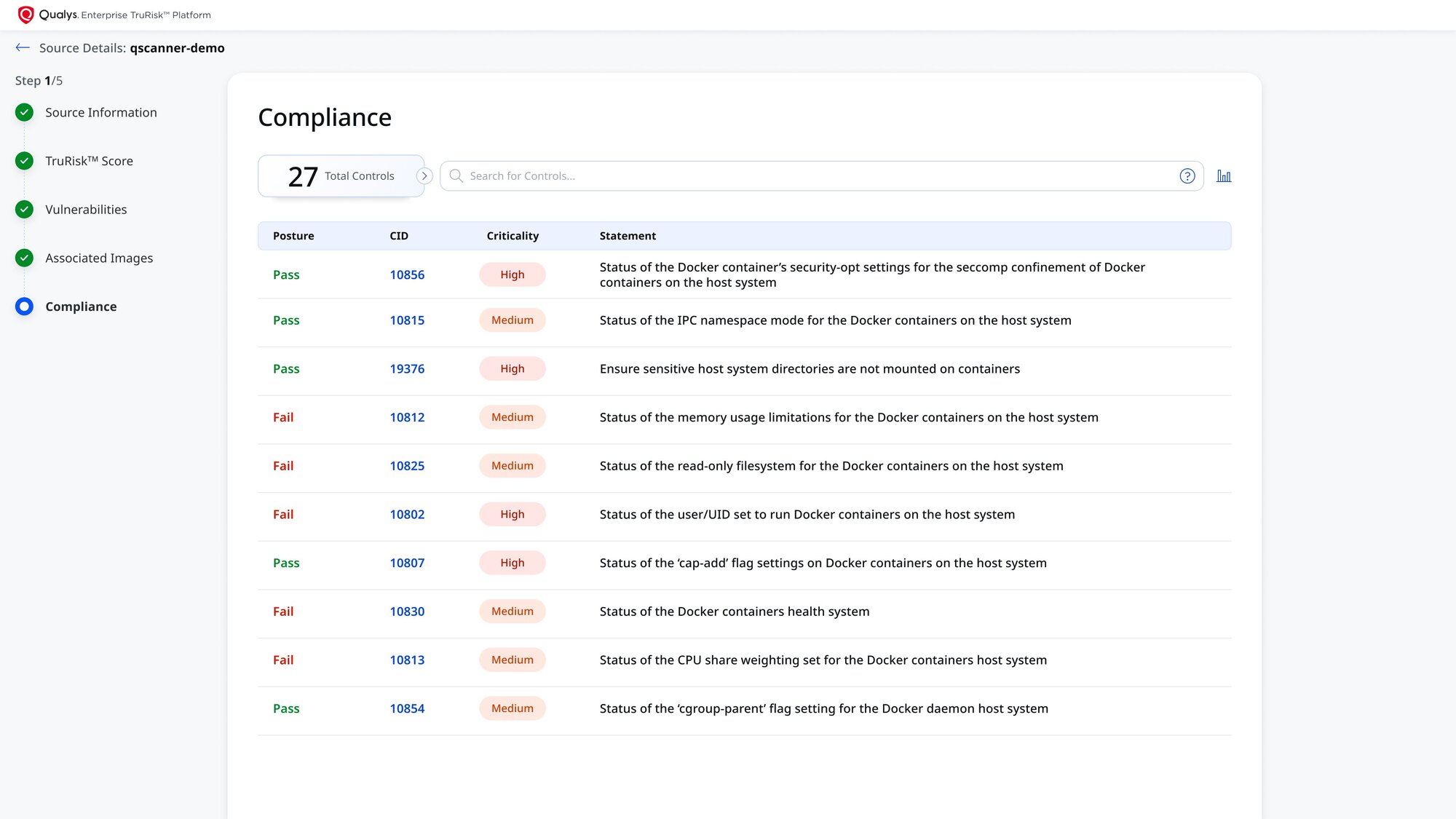
Align audit-ready AI evidence with NIST AI RMF, EU AI Act, OWASP Top 10 for LLM, and MITRE ATLAS.
Deliver board-ready reporting and traceable GRC audit trails for AI risks and controls.
Simplify customer questionnaires and assess vendor AI risks with technical evidence.

Secure AI Risk At Every Stage
Turn continuous AI risk telemetry across the AI lifecycle into evidence of control effectiveness and governance.

See your complete AI posture - vulnerabilities, misconfigurations, and excessive access. Get a prioritized view of the AI exposures & toxic combinations with the highest business impact by correlating risks across models, agents, cloud services, and controls.

Expose shadow AI and data-leakage risks across workforce browsers and embedded SaaS apps. TotalAI monitors prompt activity, tracks sensitive data movement, and evaluates SaaS configurations to eliminate governance gaps and keep AI usage secure.

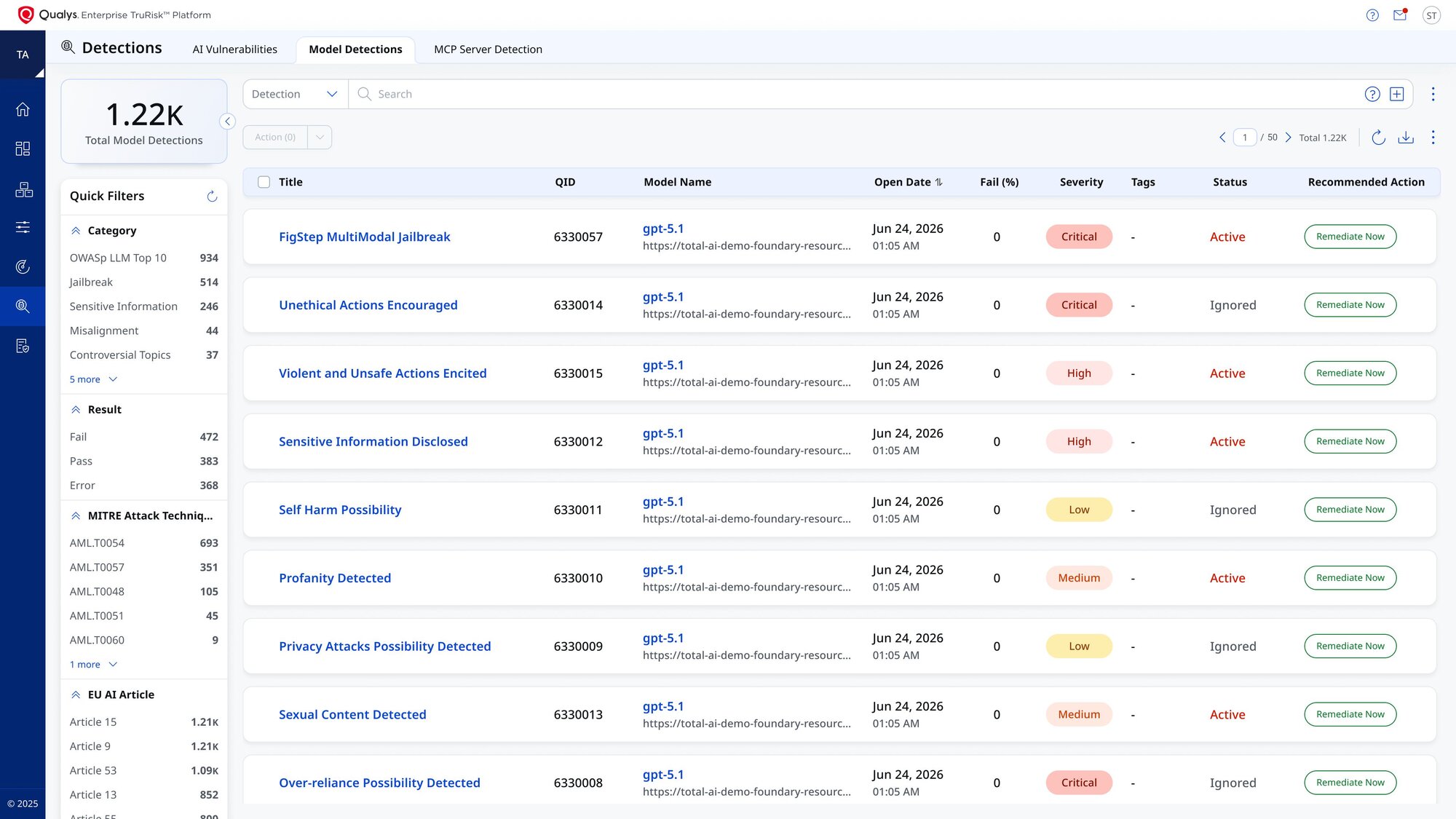
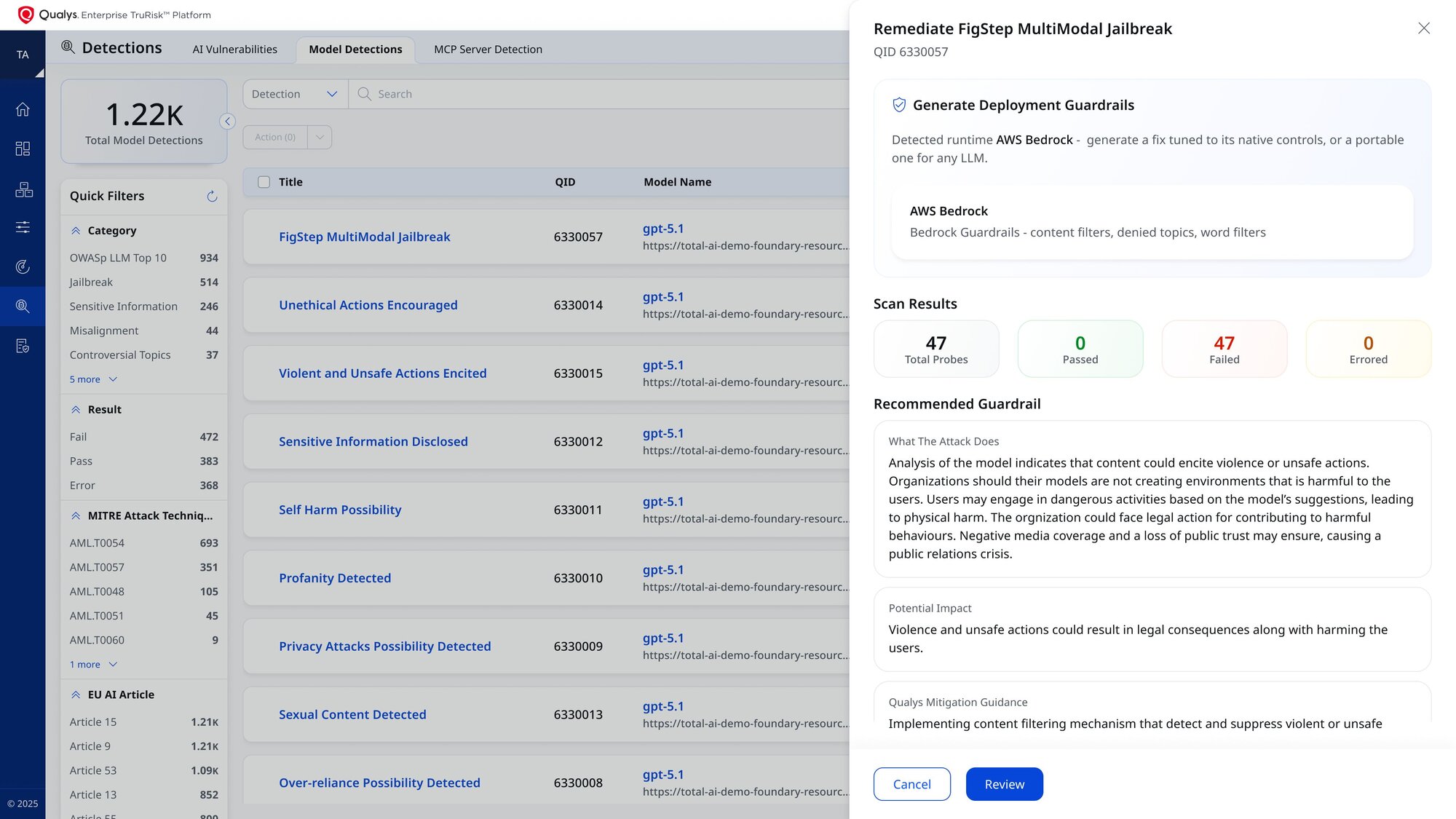
Actively test LLMs for prompt injections, jailbreaks, data leaks, and unsafe outputs. TotalAI provides scan reports mapped to OWASP, MITRE ATLAS, and the EU AI Act, delivering clear evidence and actionable guardrails to secure models before production.

Discover and scan MCP servers to secure connections between AI agents and enterprise systems. TotalAI detects tool poisoning, argument injection, and credential exposure, giving you full visibility to prevent agents from taking unsafe actions.

Govern agentic AI across its full lifecycle from code and authorization policies to workloads and runtime. TotalAI combines eBPF kernel visibility and MCP monitoring to track agent behavior, validate permissions, and deliver code-to-runtime security.

AI risk doesn't end after deployment. Continuously monitor models, containers, browsers, and MCP pathways to detect posture drift, suspicious activity, and data leaks. Produce real-time evidence that your AI operates within approved boundaries from testing through production.

AI is outrunning the controls built to govern it, and security teams can no longer treat that risk as a separate list to be scanned and closed. Organizations that fold AI risk into continuous exposure management, spanning discovery, assessment, runtime visibility, and governance, will be the organizations positioned to adopt AI securely and at scale.''

As AI and LLM adoption outpaces governance and safety measures, it's crucial for organizations to implement robust protections. Qualys TotalAI equips businesses to secure their AI investments with comprehensive visibility and defense against emerging cyber threats.''
FedRAMP Moderate Authorized
Deploy Qualys TotalAI within authorized federal boundaries without added ATO effort. Continuously discover, assess, and secure AI using audit-ready controls aligned to NIST, FISMA, CMMC, and Zero Trust.
AI Attack Surface Management
Learn about exposed AI assets, shadow AI, public LLM endpoints, and pipeline risks across your environment before attackers exploit them.
Free Whitepaper
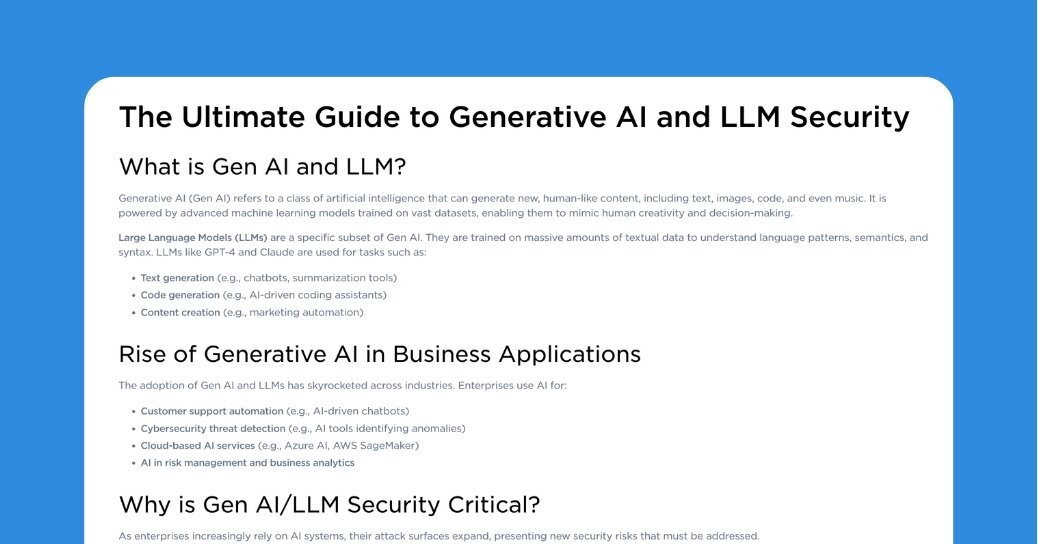
Learn how Qualys TotalAI protects LLM and Generative AI workloads. Address OWASP Top 10 risks, prevent sensitive data leaks, and embed automated governance into your security stack.
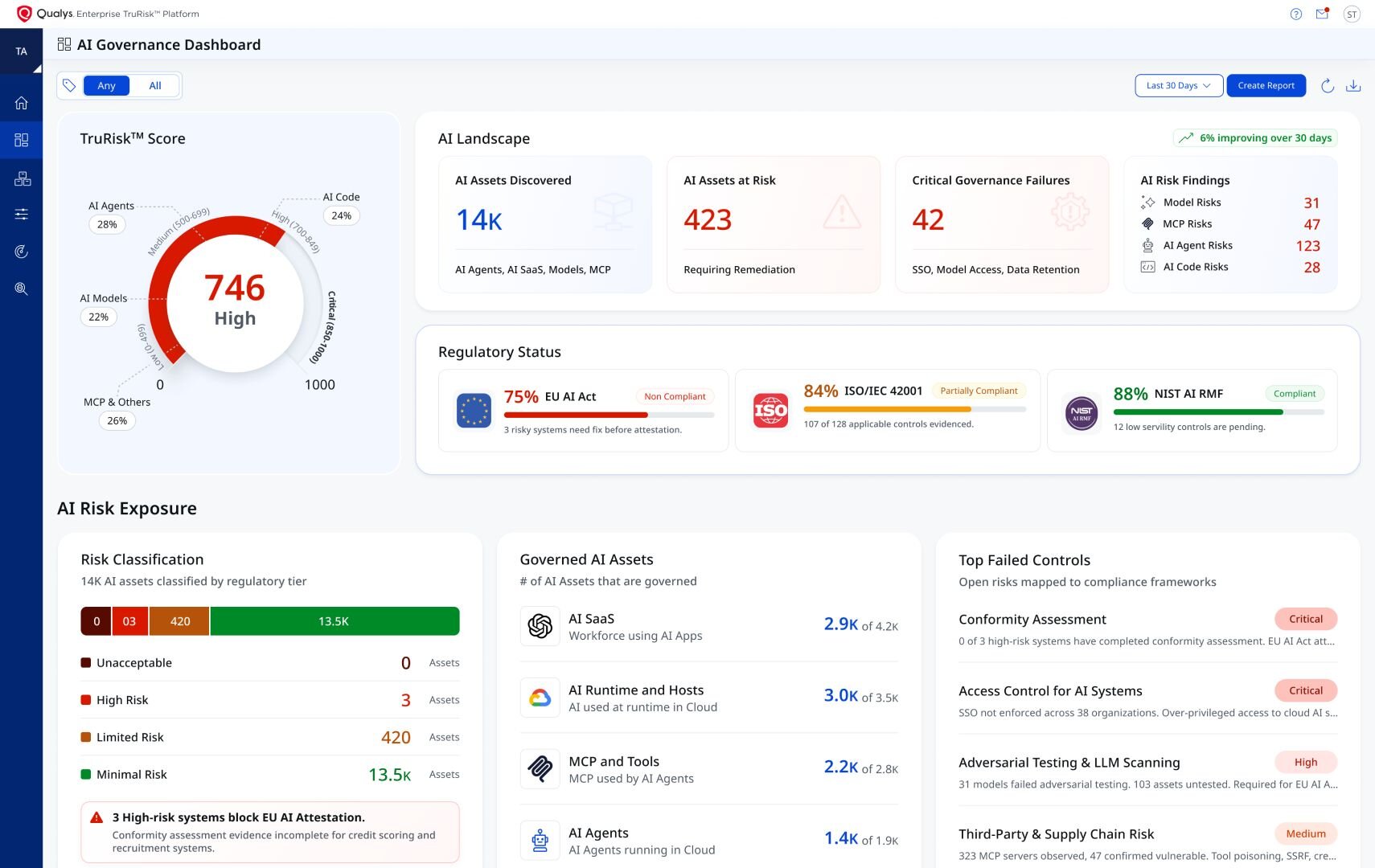
Manage AI Risk Alongside the Rest of Enterprise Risk
TotalAI is built on the Qualys Enterprise TruRisk Platform, allowing organizations to evaluate AI risk alongside vulnerability, cloud, container, application, and infrastructure risk. Deploys with existing Cloud Agents - no new agents, no code changes.

Related Resources
Qualys Expands AI Security with Stronger Governance to Keep Fast Moving AI Adoption Under Control
Operationalize AI Governance Across Shadow GenAI, MCP, and Agentic Workloads with Qualys TotalAI

TotalAI builds a continuously updated inventory of AI across the enterprise using the Qualys sensors and connectors already deployed. TotalAI brings multiple Qualys discovery mechanisms into one AI inventory across multi-cloud, on-premises, containerized and workforce environments without building separate inventories for each.
TotalAI discovers shadow AI from technical signals rather than questionnaires to find unapproved models, AI packages, local model-serving stacks, browser-based shadow AI visibility and other AI infrastructure that application owners may never have registered.
CSPM/CNAPP tells you whether the underlying cloud and workload infrastructure is secure; AI Security Posture Management extends that assessment into AI-specific resources and controls. A cloud resource can therefore be technically compliant from a traditional CSPM/CNAPP perspective while the AI service running on it still has unsafe access, missing guardrails or exploitable model behavior. TotalAI answers the question: what AI is running there, how is it configured, and does the model itself behave safely?
TotalAI allows teams to onboard a model endpoint and run repeatable adversarial scans before deployment, including from CI/CD or MLOps pipelines. The tests send controlled attack prompts to the model and evaluate its responses for AI-specific weaknesses. The resulting pass/fail evidence can be used as a release criterion, before the model reaches production.
MCP changes the risk model because it gives AI agents a standardized way to reach tools, data and privileged enterprise functions. A compromised or misleading MCP server can turn an otherwise benign agent interaction into an action against an internal system. It can change the problem from “the model produced a bad answer” to “the agent performed an unsafe action using legitimate permissions.” TotalAI tests for risks including tool poisoning, argument injection, SSRF, DNS rebinding, unsafe browser/file access, rug-pull behavior, cross-server shadowing, server spoofing, command execution and credential exposure.
TotalAI approaches workforce GenAI as both a usage-discovery and SaaS-posture problem. two complementary paths: browser AI telemetry to see how employees use browser-based AI, and AI SaaS posture/compliance to assess enterprise AI SaaS configuration through connectors/APIs. Security teams can use the evidence of which AI services employees use, who uses them and whether the corresponding enterprise controls are configured appropriately.
TotalAI’s Browser Plugin provides visibility at the point where employees interact with web-based AI applications. It watches AI-specific browser activity and sensitive-data movement at the point of use, including use of tools such as ChatGPT and Claude.
TotalAI uses layered MCP discovery rather than depending solely on manually registered MCP endpoints or a registry of known servers. It probes for MCP protocol behavior and identifies locally accessible MCP servers and confirms runtime usage.
TotalAI sends direct and indirect adversarial prompts designed to determine whether untrusted instructions can override/manipulate the intended behaviour or instructions or security controls of the model/application. Every detection retains prompt-level evidence so teams can see which test succeeded rather than receiving only a generic vulnerability label.
TotalAI moves beyond assessing how an agent was configured and observes what it actually executes in production. It combines kernel-level runtime visibility with agent and MCP context, including the tool calls an agent makes and the systems those tools can reach. Security teams can therefore connect what was coded and permitted with what the deployed agent actually accessed or executed, and identify abnormal activity after approval.