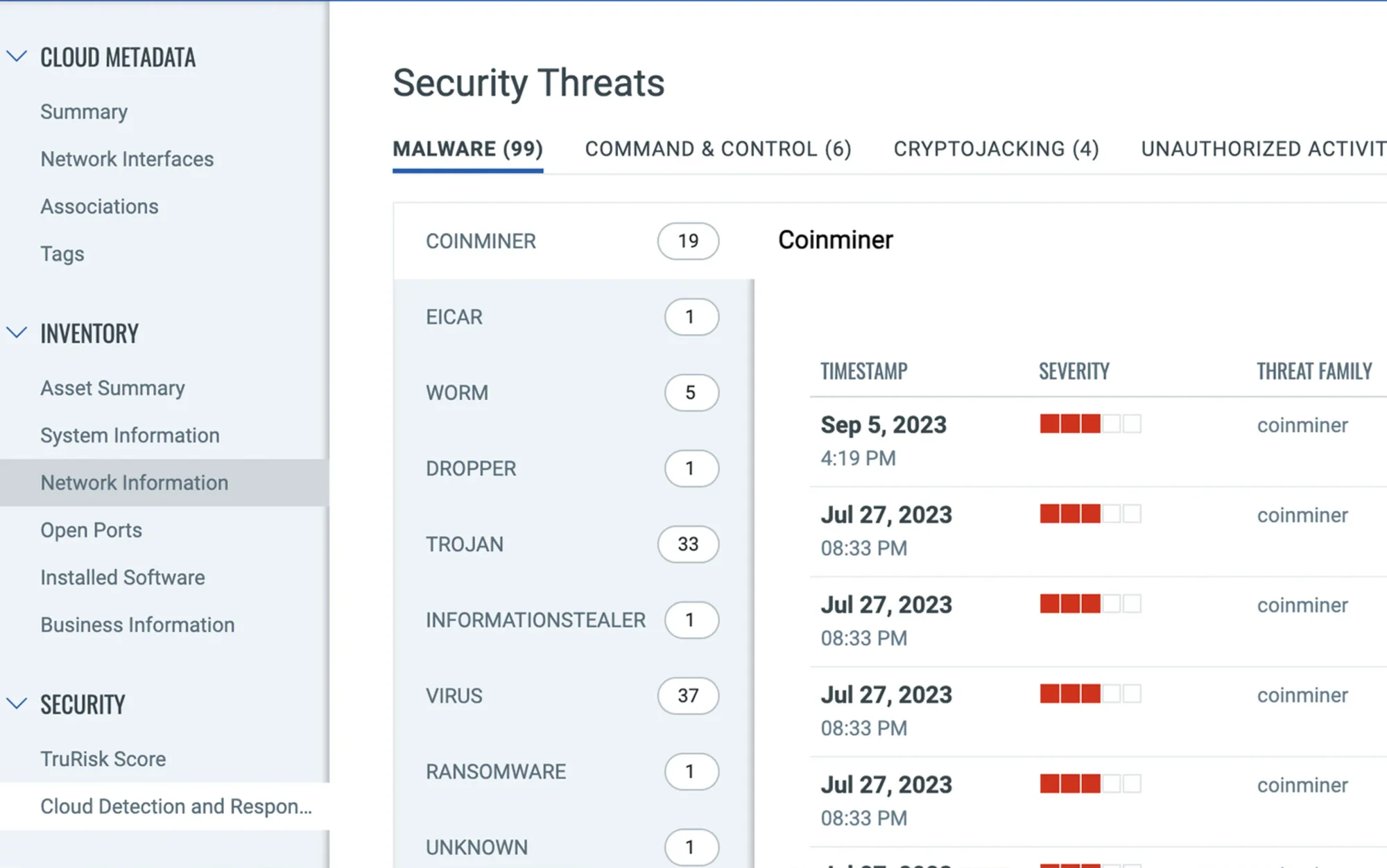
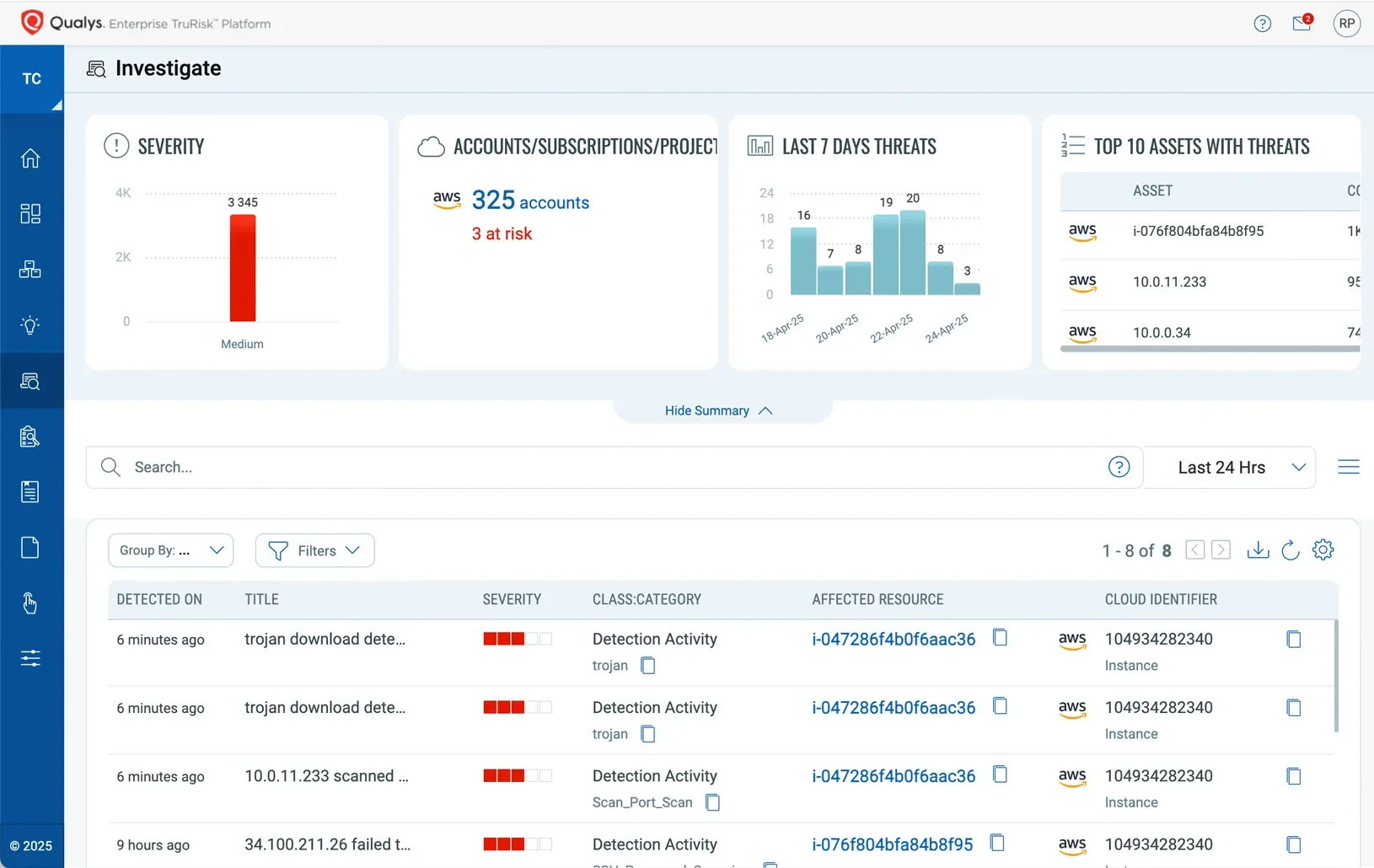
Our CDR tool helps you detect known and unknown threats in real time with deep learning AI.
Detect Active Exploitation
Get continuous real-time protection of your multi-cloud environment against active exploitation, malware, and unknown threats.
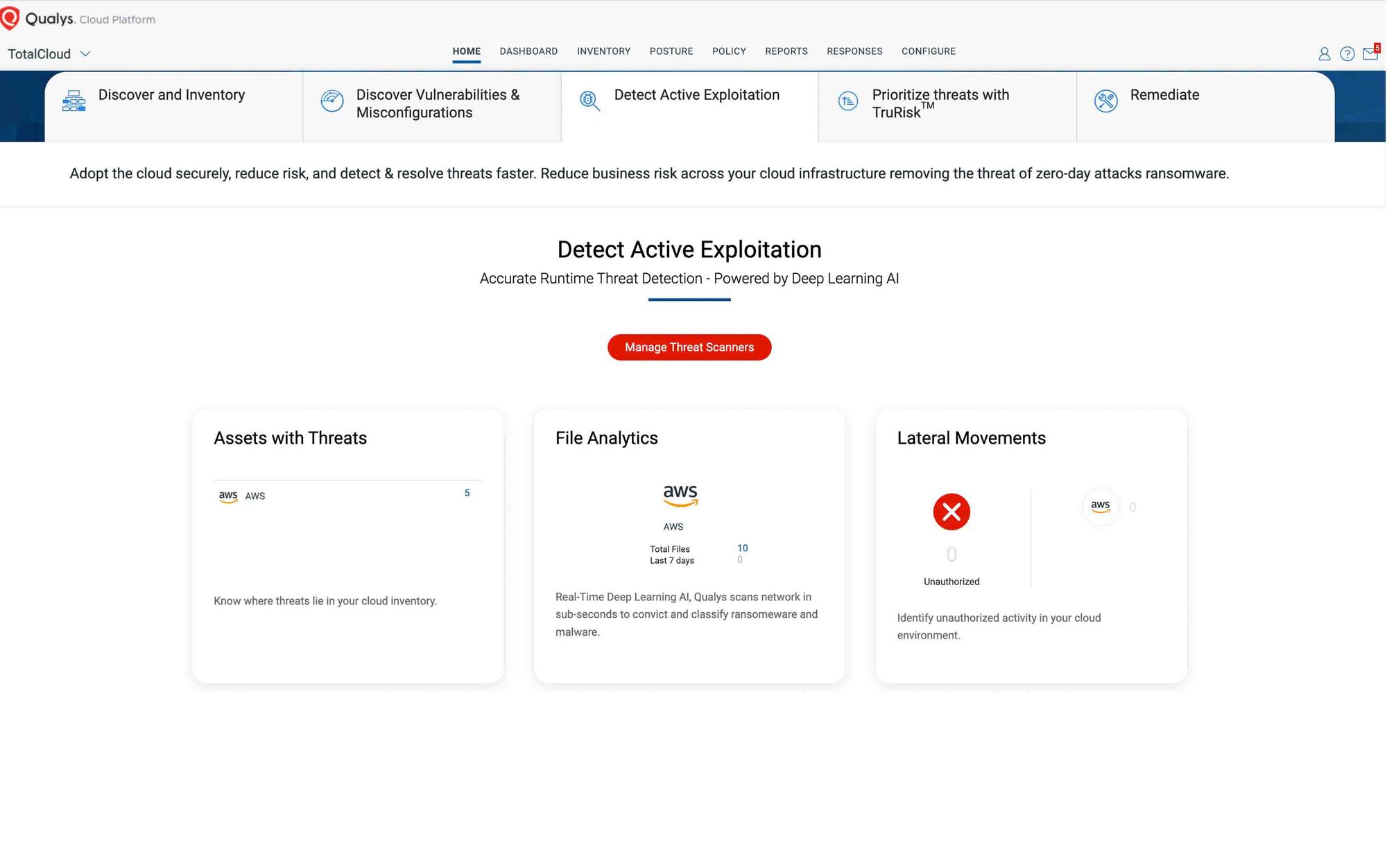

Detect threats from build to runtime
Detect zero-day and novel threats

Deploying Qualys CDR for AWS and Azure with just a few clicks, in a matter of minutes, across multiple AWS and Azure subscriptions, was a game changer for our security team. We have a complex environment with many controls, and TotalCloud team worked with us on integration with existing solutions including Secure Web Gateways and integrated SIEM. With their engineering team, together made sure all the security finds were tightly integrated with our SIEM platform. I have rarely seen this level of competency and engagement effort from a vendor.

Qualys is enhancing its widely used platform to deliver visibility, context, speed, automation, and orchestration in a comprehensive solution to help organizations scale their security and compliance programs for modern software development. Qualys TotalCloud incorporates security into development workflows, enabling them to release secure, reliable code, while giving security teams the control and visibility they need to manage risk by reducing their attack exposure and rapidly responding to threats.

The Qualys approach [to runtime security] empowers security to follow the container image with built-in instrumentation, enabling visibility and behavior enforcement for running containers across all types of container infrastructure.

Inspect cloud network traffic for suspicious communications, unauthorized activity, crypto miners, malware, and C2 communications using deep-learning AI algorithms.
Detection of unauthorized activity, such as brute-force attacks SSH and RDP, and port scans indicating lateral movement. This feature allows you to detect lateral movement in the organization when an attacker is attempting to infiltrate other virtual machines.
Protect against emerging cloud-based attacks by inspecting network traffic to detect attacks at various points along the cloud kill chain.
Analyzes network traffic to identify any patterns and behaviors associated with ransomware activity using AI technology and deep learning algorithms.
Improve your security, identify assets that are being actively probed, and automatically take the necessary action to improve security.

Leverage deep learning AI to detect unknown threats in less than a second without using legacy signature-based tools.
Detect known and unknown threats like malware, ransomware, and unauthorized access in real-time leveraging AI.
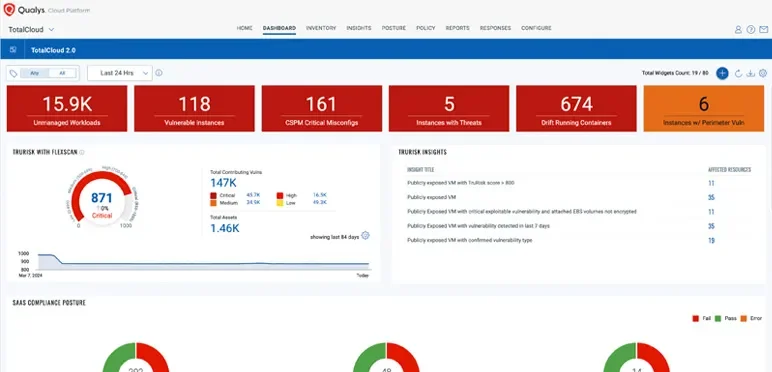
Introducing TotalCloud™ with TruRisk Insights
Traditional IDS relies on known signatures, delaying detection of new malware. Modern malware evolves quickly, rendering traditional methods ineffective against zero-day exploits.
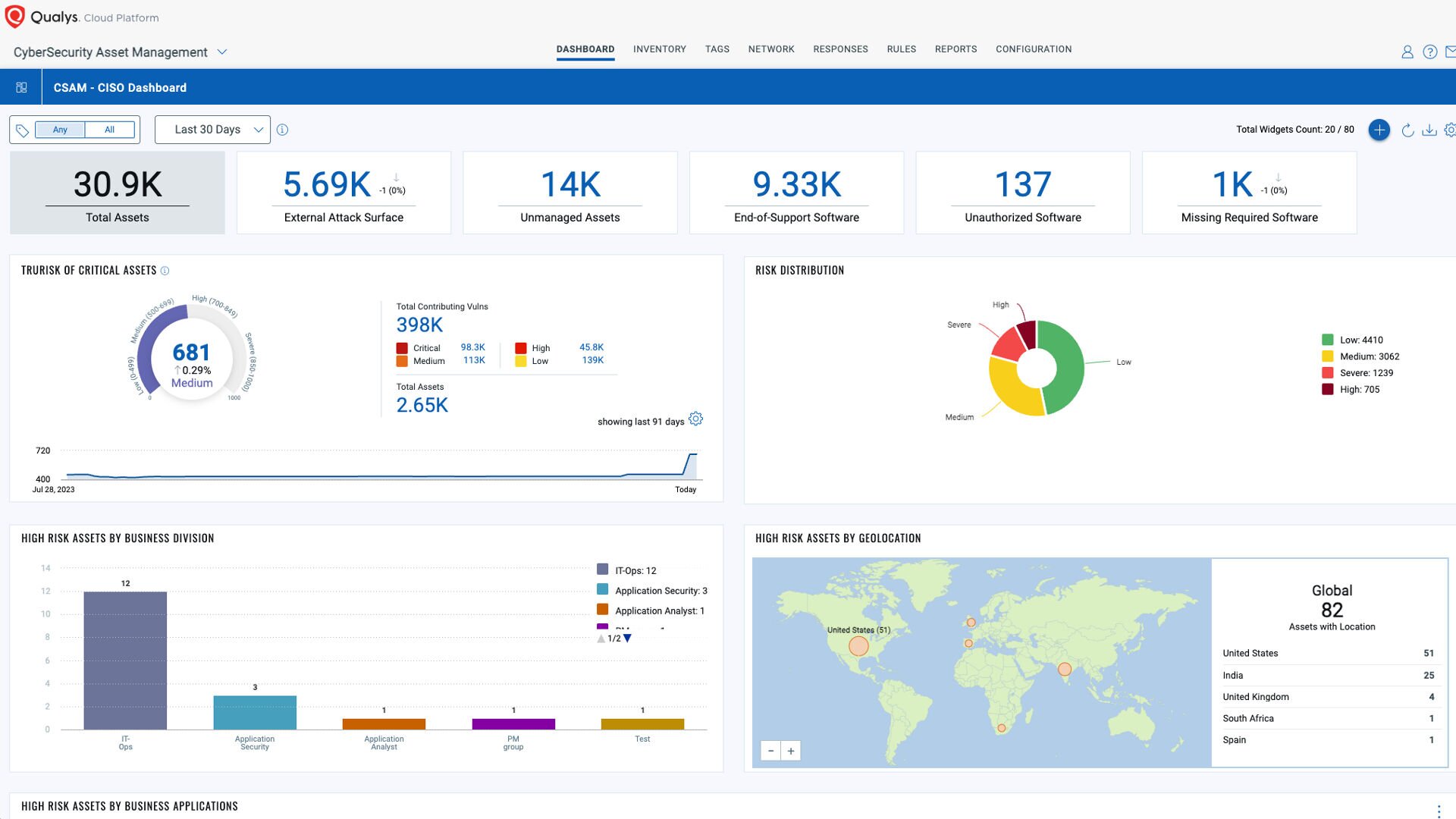
The Enterprise TruRisk Platform provides you with a unified view of your entire cyber risk posture so you can efficiently aggregate and measure all Qualys & non-Qualys risk factors in a unified view, communicate cyber risk with context to your business, and go beyond patching to eliminate the risk that threatens the business in any area of your attack surface.

Qualys Cloud Detection and Response (CDR) identifies suspicious and malicious activity occurring in cloud environments and provides the context needed to investigate and respond. CDR adds active-threat evidence to TotalCloud so posture, vulnerability, identity, and exposure risk can be evaluated alongside what attackers may actually be doing.
Yes. Vulnerability and posture findings describe potential exposure, while CDR and runtime telemetry provide evidence of active behavior. TotalCloud combines those signals so teams can prioritize a vulnerable workload showing exploitation or malicious communication ahead of an equally severe finding with no active threat evidence.
Yes. Qualys can identify malware and software risk before deployment through container and workload assessment, then add network and runtime evidence once the workload is running. By connecting artifact risk, deployed workload context, malicious communications, and runtime detections, teams can understand whether a suspicious component is simply present or is participating in active malicious behavior.
Qualys combines deep-learning analytics, behavioral detection, threat intelligence, and runtime telemetry to identify suspicious activity that may not match a known signature. When new vulnerabilities or zero-days emerge, TotalCloud can also combine exposure and software context with runtime evidence to help teams determine which affected workloads present the most immediate risk.
Qualys connects predeployment findings such as vulnerable dependencies, malicious software, secrets, and container-image risk with the workloads where those artifacts are deployed. CDR and runtime-security signals then add evidence of suspicious execution and network behavior, helping teams follow risk from the software supply chain into production.
Depending on the environment, Qualys CDR can analyze network traffic, cloud flow data, cloud activity logs, workload and container runtime events, and other security telemetry such as AWS Guard Duty Events. These signals are correlated with asset, vulnerability, identity, and cloud context to give analysts a more complete view of active cloud threats.
CSPM identifies configuration and posture weaknesses that could create exposure. CDR identifies suspicious or malicious activity occurring in the cloud. Together they show both where an attack could happen and where suspicious activity is actually present.
CDR adds runtime evidence to broader TotalCloud risk context, helping teams distinguish actively targeted or compromised assets from lower-priority exposure without threat evidence.
Yes. Container runtime and cloud-threat context can be brought together so suspicious container behavior can be investigated alongside broader cloud telemetry, image risk, workload context, and asset exposure.