Build and play automated remediation workflows with a no-code orchestration platform (Qualys Flow) with enterprise-grade precision.
Simplify workflow creation

Easily customize security control
Enrich security teams
Orchestrate end-to-end remediation workflows

Deploying Qualys CDR for AWS and Azure with just a few clicks, in a matter of minutes, across multiple AWS and Azure subscriptions, was a game changer for our security team. We have a complex environment with many controls, and TotalCloud team worked with us on integration with existing solutions including Secure Web Gateways and integrated SIEM. With their engineering team, together made sure all the security finds were tightly integrated with our SIEM platform. I have rarely seen this level of competency and engagement effort from a vendor.

Qualys is enhancing its widely used platform to deliver visibility, context, speed, automation, and orchestration in a comprehensive solution to help organizations scale their security and compliance programs for modern software development. Qualys TotalCloud incorporates security into development workflows, enabling them to release secure, reliable code, while giving security teams the control and visibility they need to manage risk by reducing their attack exposure and rapidly responding to threats.

The Qualys approach [to runtime security] empowers security to follow the container image with built-in instrumentation, enabling visibility and behavior enforcement for running containers across all types of container infrastructure.

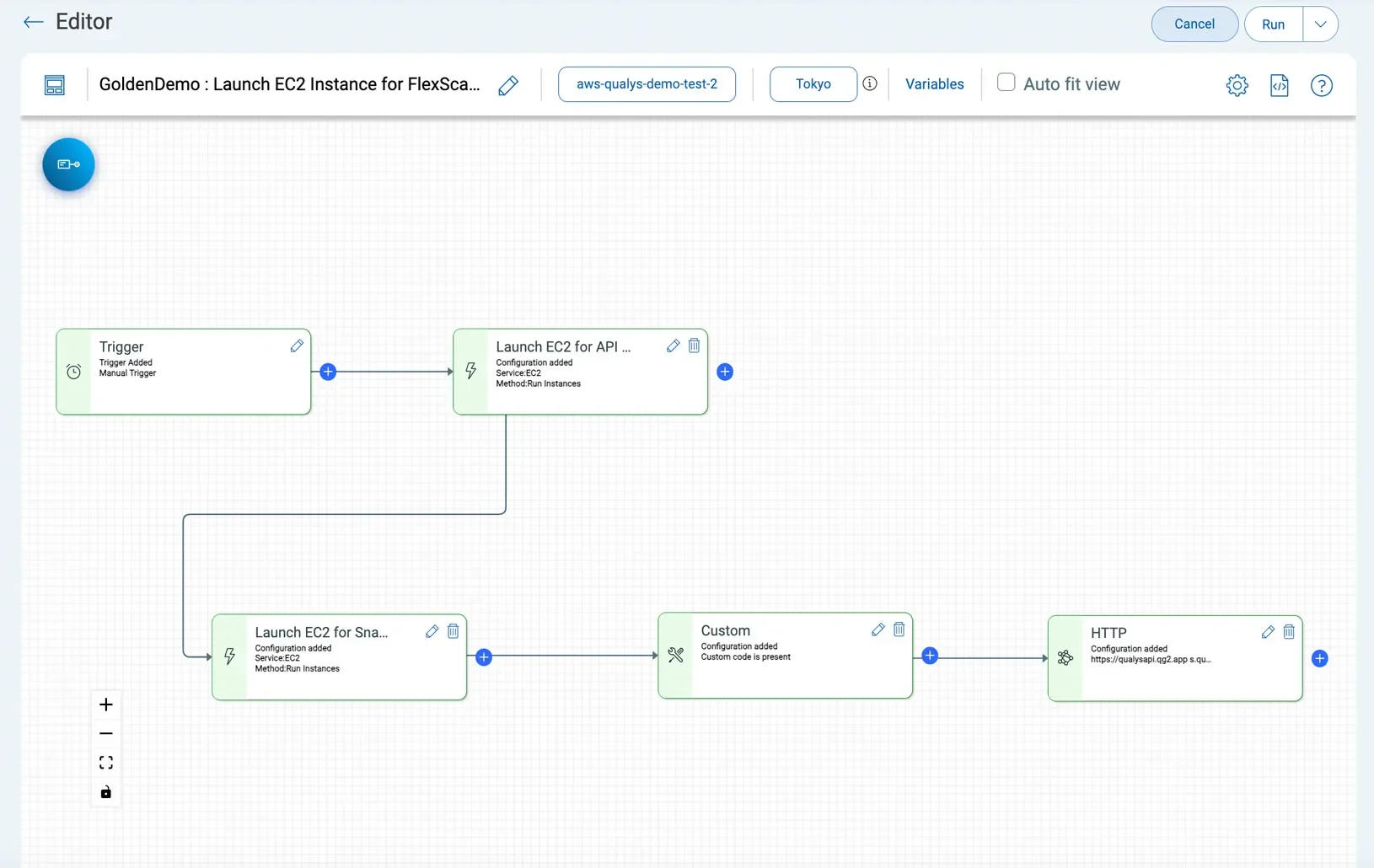
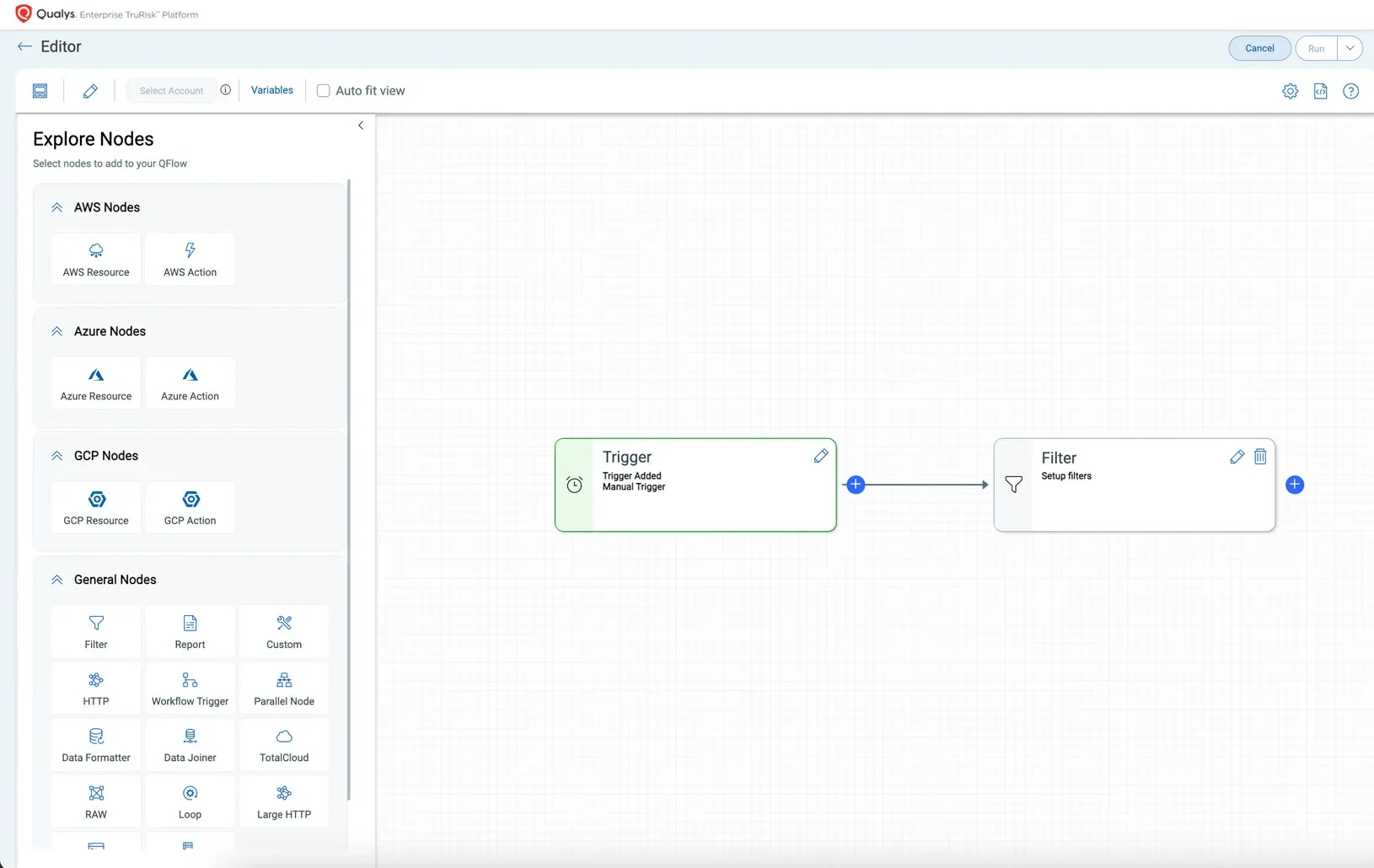
Achieve use case-based requirements, and build automation and response playbooks through a drag-and-drop interface of nodes within minutes.
Introducing TotalCloud™ with TruRisk Insights
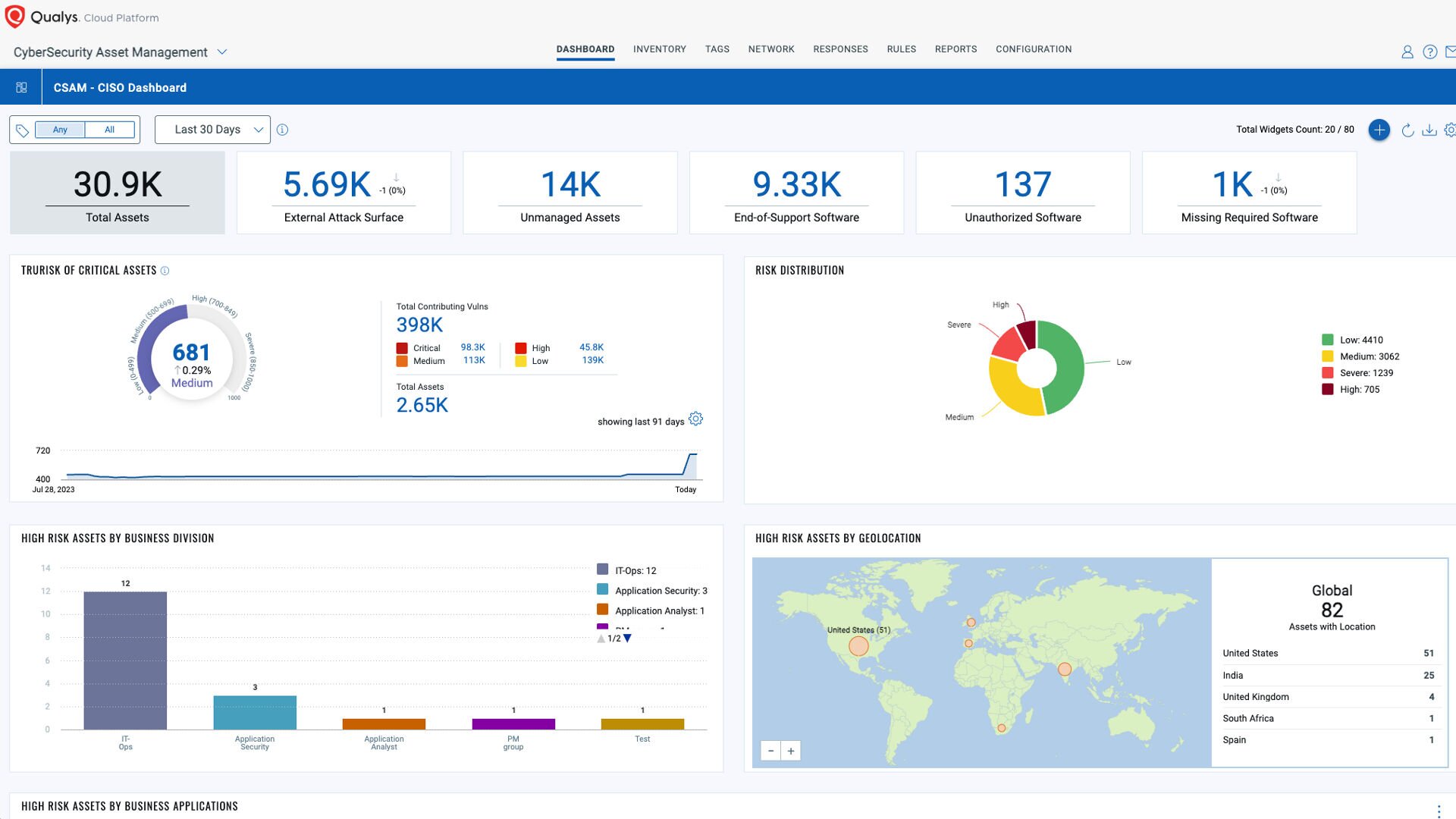
The Enterprise TruRisk Platform provides you with a unified view of your entire cyber risk posture so you can efficiently aggregate and measure all Qualys & non-Qualys risk factors in a unified view, communicate cyber risk with context to your business, and go beyond patching to eliminate the risk that threatens the business in any area of your attack surface.

QFlow is the automation and response layer of TotalCloud. It turns security findings into repeatable actions—from creating controls and correcting misconfigurations to addressing compliance failures, responding to threats, notifying owners, and orchestrating remediation—without requiring teams to build and maintain custom scripts.
Teams can describe the security outcome they want in natural language and use AI to generate a QFlow workflow. The workflow can then be reviewed, customized, and refined before execution, helping teams move from a newly identified risk to an operational response much faster.
Yes. QFlow can create organization-specific controls when an out-of-the-box policy does not address a particular requirement. Teams can define the desired security outcome, generate or customize the control logic, and continuously evaluate cloud resources against it.
QFlow can orchestrate response across cloud misconfigurations, compliance failures, vulnerabilities, risky permissions, operational security issues, and active threats. Depending on the use case, the response can include remediation, containment, notifications, approvals, ticket creation, or other security actions.
Different risks require different responses. A misconfiguration may require changing a cloud setting; a compliance failure may require restoring a required configuration and documenting the result; a vulnerability may require patching or mitigation; and an active threat may require containment or isolation. QFlow helps orchestrate the appropriate response instead of applying one remediation model to every finding.
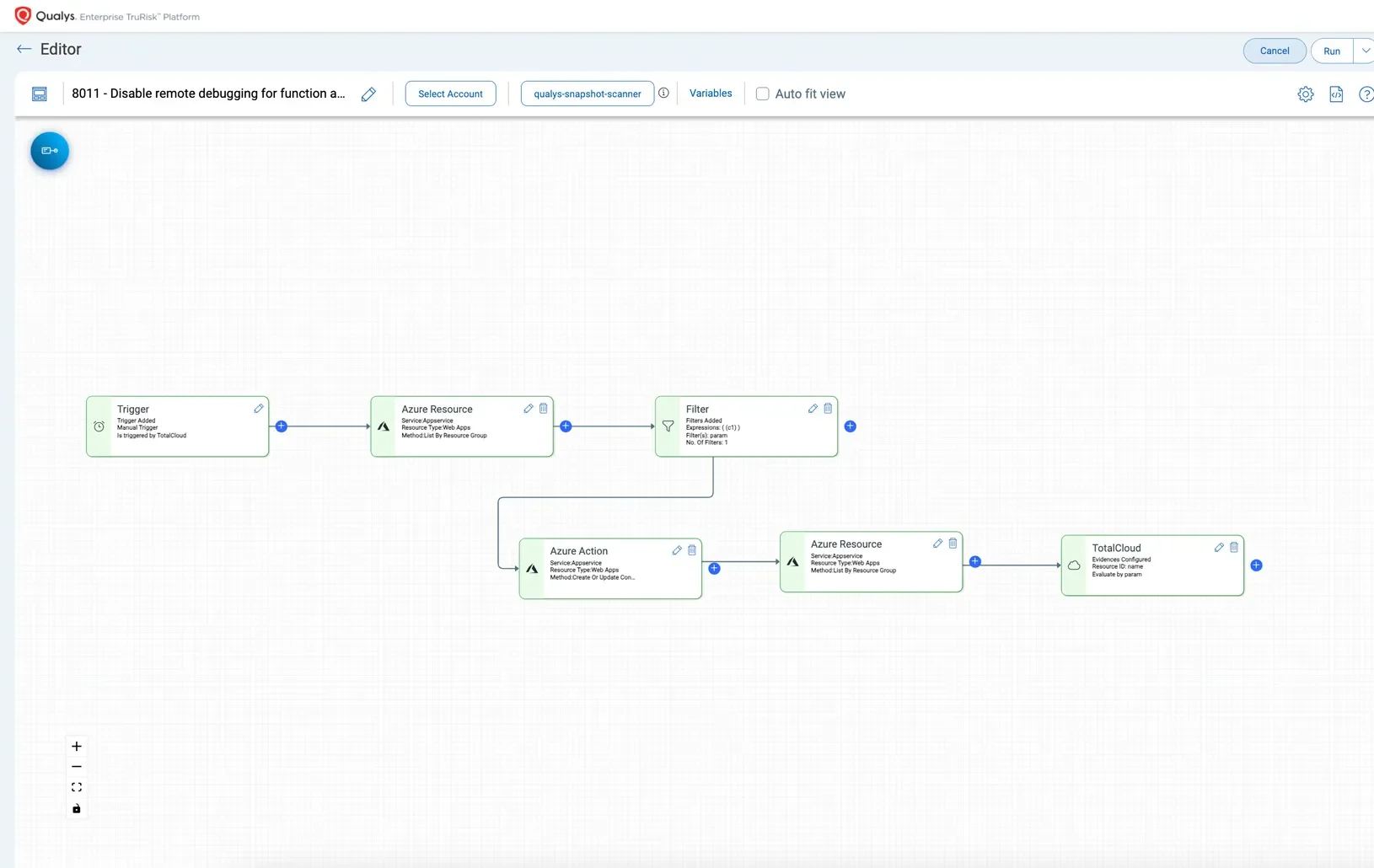
Yes. QFlow can take a TotalCloud finding, apply contextual logic, invoke supported cloud actions, and validate the response. Organizations can use automated, approval-based, or human-guided workflows depending on the risk and their change-management requirements.
Yes. QFlow can act as a response playbook by combining detections, risk context, decision logic, notifications, and supported containment or remediation actions. This helps teams standardize how they investigate and respond to threats instead of coordinating every action manually.
When a new threat emerges, AI-assisted workflow creation can help teams rapidly define a response rather than waiting for a manually authored playbook. QFlow can orchestrate mitigation, containment, ownership, notifications, and follow-up actions while keeping the workflow reviewable and governed by the security team.
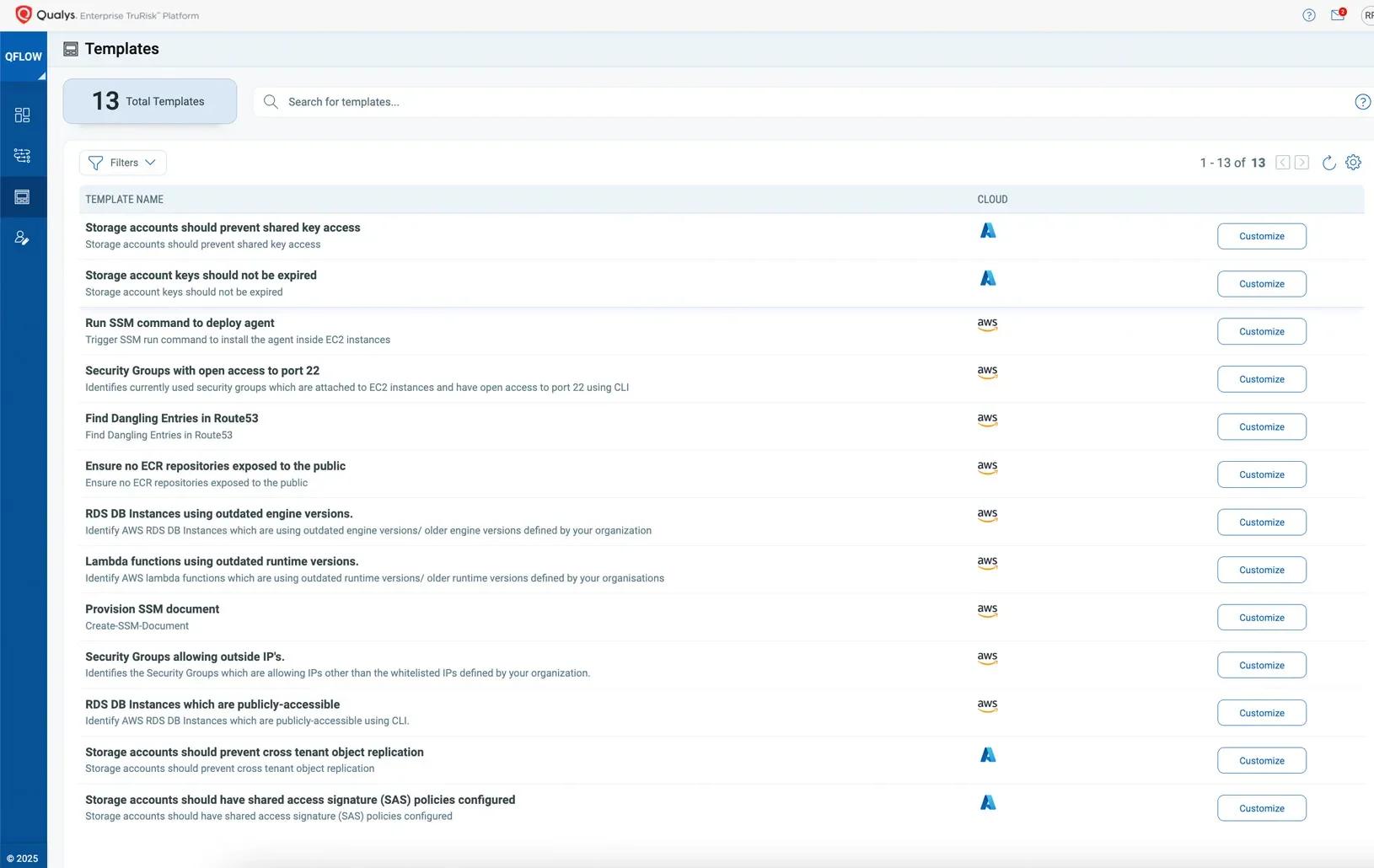
Yes. Qualys provides a library of prebuilt QFlow templates for common cloud-security and remediation scenarios. Teams can use these as delivered or customize them to match their own policies, approval processes, and operating model.
QFlow orchestrates the broader security-response process across cloud configurations, compliance issues, identities, approvals, notifications, and multi-step playbooks. TruRisk Eliminate provides specialized vulnerability remediation and mitigation. Together, QFlow can coordinate the response while Eliminate performs the appropriate vulnerability-remediation action.