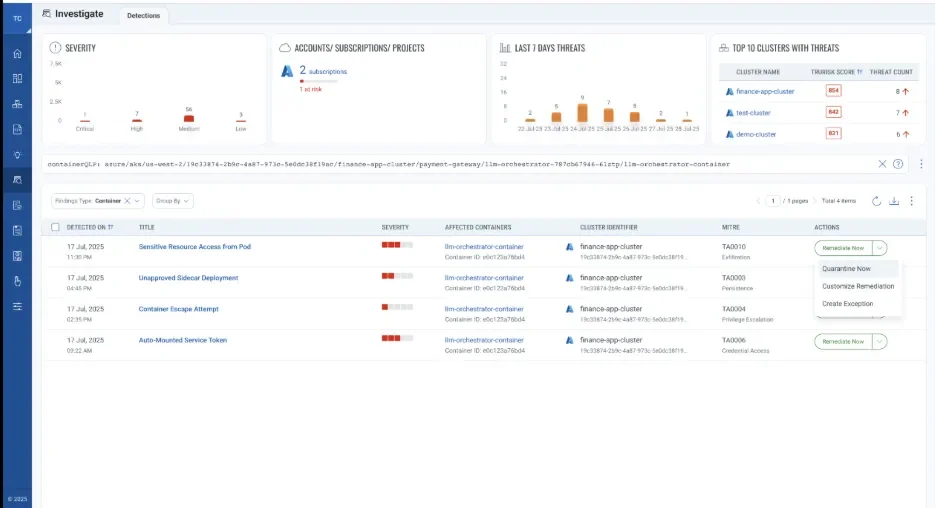
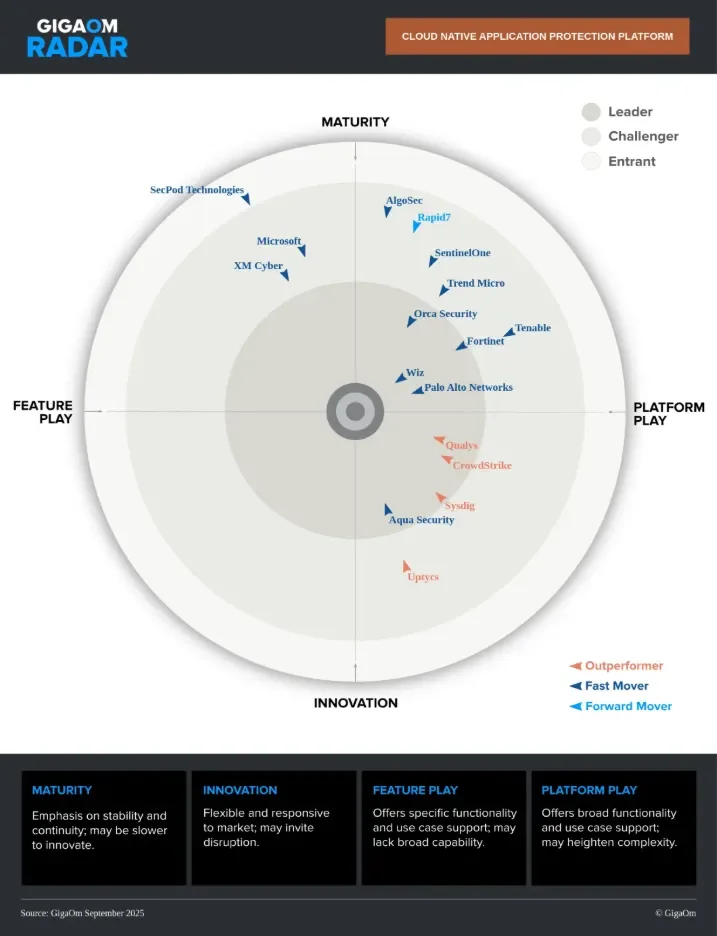
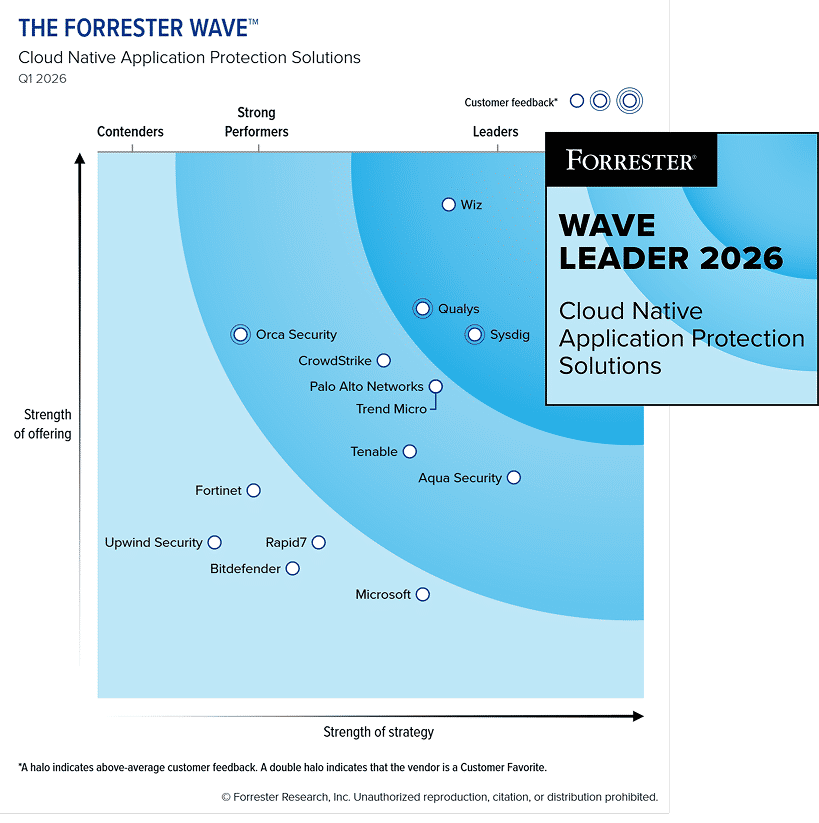
Qualys offers industry and analyst leading security that offers unified discovery and risk management for hybrid cloud and container workloads including runtime-focused protection, context-driven shift-left security, supply chain security from code to cloud, and integrated posture management and remediation.
While Aqua Security offers specialized tools for cloud-native workloads, analysts note that it often scores lower in key enterprise categories like broader hybrid cloud protection, CNAPP Administrator management, and unified risk management. Extend your security strategy with the cloud-native breadth and automation only Qualys can deliver.


Analysts rank Qualys high for its ability to provide unified hybrid visibility and cloud workload protection for cloud-native, container, and legacy workloads whereas Aqua is more specialized in containers but provides less coverage for hosts and on-prem workloads.
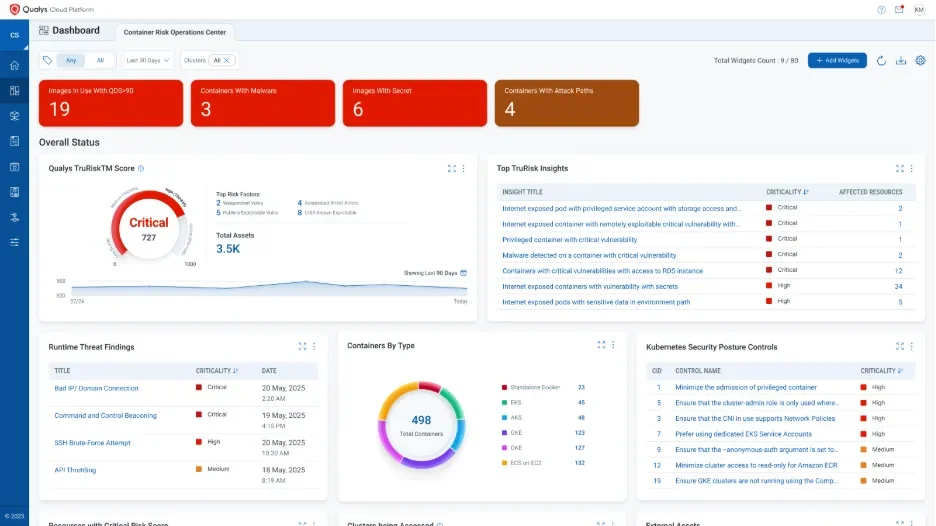
Qualys TruRisk Prioritization provides the needed business, exposure and cloud attack path context that is needed to prioritize millions of risks at scale. While Aqua provides deep visibility into CVEs, it struggles to provide the needed cloud attack path and business context needed to prioritize cloud-native risk at scale.
Qualys is recognized for eliminating tool sprawl by consolidating CSPM, KSPM, Container Security, Developer Security and CDR into a single platform with unified remediation and auditing. Aqua’s segmented licensing between Dev and Cloud Security often increases operational overhead and Total Cost of Ownership.
Qualys consistently receives top marks for cloud-native remediation with spans beyond the workload to include both patching and cloud automation playbooks across 200+ cloud services. Analysts note that Aqua focuses primarily on runtime blocking (virtual patching) and lacks the broader cloud coverage required for regulated industries.
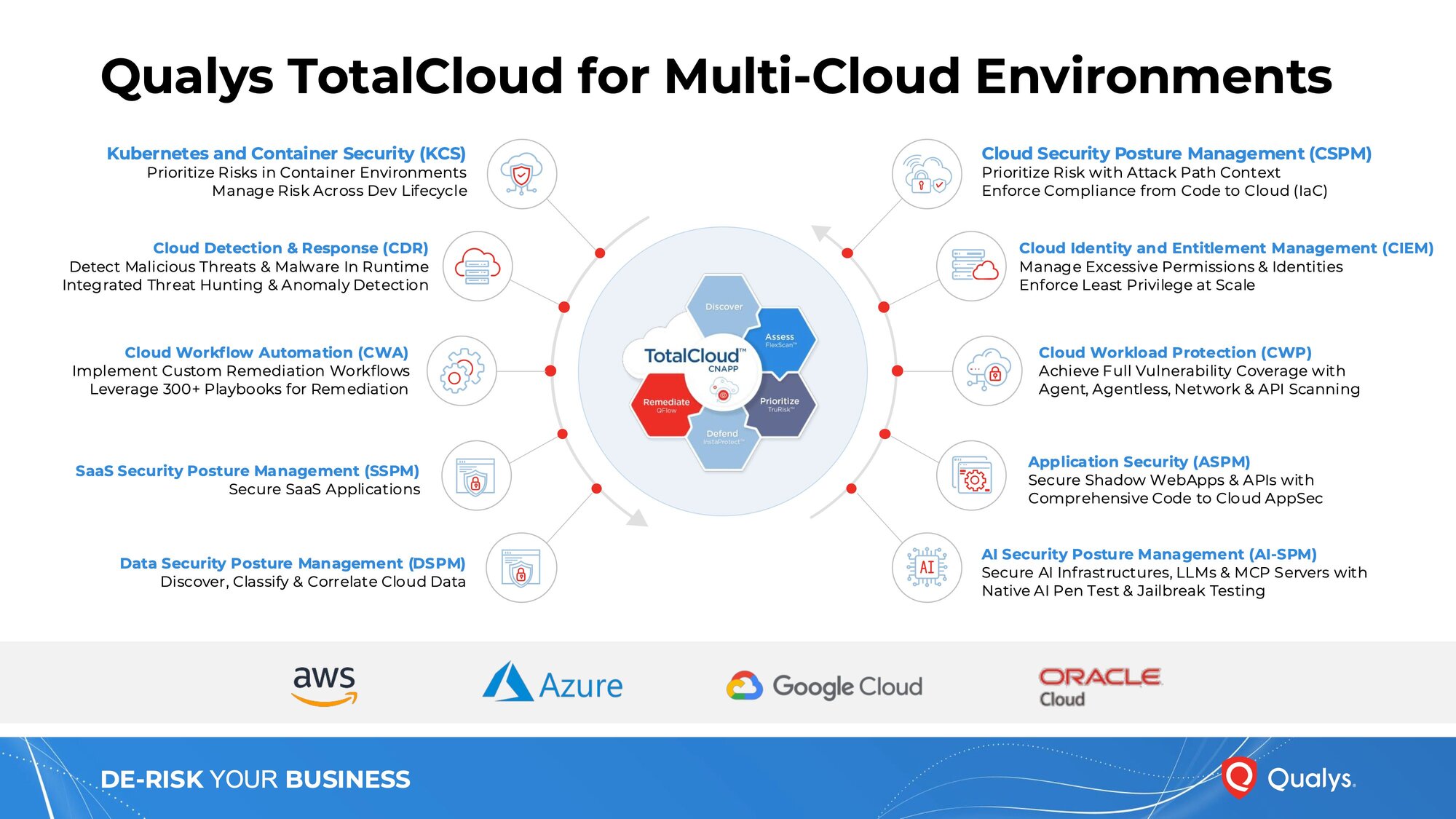

While Aqua’s focus limits it primarily to cloud-native assets like containers and serverless functions, Qualys FlexScan™ provides real-time, blind-spot-free discovery across all cloud accounts, containers, serverless assets, and legacy on-prem infrastructure.

Complete Coverage: Unified inventory for Kubernetes, AWS, Azure, GCP, OCI, on-prem, mobile, and OT/IoT in a single pane.
Zero-Touch Discovery: Identifies shadow IT, unmanaged assets, and risky exposures automatically using agentless, agent-based, and network scanning.
Smart Consolidation: Consolidates image reporting; if an image is on a host and in a registry, Qualys reports one unified entry to eliminate duplication.
Siloed Visibility: Analysts note significant visibility gaps in legacy on-premises infrastructure and VMs.
Fragmented View: Requires separate tools for non-containerized workloads, making enterprise-wide risk management difficult.
Snapshot Reliance: Agentless scanning often relies on periodic snapshots rather than real-time continuous assessment.
Complete Coverage: Unified inventory for Kubernetes, AWS, Azure, GCP, OCI, on-prem, mobile, and OT/IoT in a single pane.
Zero-Touch Discovery: Identifies shadow IT, unmanaged assets, and risky exposures automatically using agentless, agent-based, and network scanning.
Smart Consolidation: Consolidates image reporting; if an image is on a host and in a registry, Qualys reports one unified entry to eliminate duplication.
Siloed Visibility: Analysts note significant visibility gaps in legacy on-premises infrastructure and VMs.
Fragmented View: Requires separate tools for non-containerized workloads, making enterprise-wide risk management difficult.
Snapshot Reliance: Agentless scanning often relies on periodic snapshots rather than real-time continuous assessment.
Continuous Assessment: Continuously discovers and assesses images + running containers across Kubernetes, hosts, registries, and CI/CD—covering vulnerabilities, malware, secrets, and SBOM—then prioritizes based on what’s actually running (not just what was scanned).
Noise-Canceling Shift-Left: Runtime + exposure context flows back to developers so they fix the few issues that drive real risk (vs. chasing endless CVEs), with “code-to-cloud” guidance designed for in-workflow remediation.
Cloud + Attack-Path Context: Risk prioritization is tied to attack-path thinking—helping teams break the chain across identities, misconfigurations, and workloads instead of treating container findings in isolation.
Business-Entity Reporting (Dynamic Tags + RBAC): Tag-driven segmentation + RBAC lets you run true multi-team / multi-LOB reporting (shared base images, app-team scoping, ownership views) without duplicating environments.
Unified / De-duplicated Inventory: Normalizes inventory so the same artifact doesn’t create fragmented reporting across “where it lives” (pipeline vs registry vs runtime), reducing duplicate work and noisy dashboards.
Context exists, but cross-domain “risk normalization” is often harder at scale: Aqua has code-to-cloud tracing and runtime-oriented views, yet standardizing business context (consistent ownership taxonomy, enterprise tagging model, cross-portfolio reporting) typically takes more integration/governance effort in very large environments.
Consolidation overhead in complex estates: In multi-registry / multi-scanner realities, teams often spend time deduplicating artifacts, aligning naming, and normalizing ownership across pipelines and clusters before reporting is “exec-ready.”
Operational consistency across SecOps workflows: Getting container findings to land cleanly into a single risk reporting + ticketing + response motion is easier when containers are natively embedded into the same platform used for broader exposure/risk operations (vs. stitching between multiple systems).
Continuous Assessment: Continuously discovers and assesses images + running containers across Kubernetes, hosts, registries, and CI/CD—covering vulnerabilities, malware, secrets, and SBOM—then prioritizes based on what’s actually running (not just what was scanned).
Noise-Canceling Shift-Left: Runtime + exposure context flows back to developers so they fix the few issues that drive real risk (vs. chasing endless CVEs), with “code-to-cloud” guidance designed for in-workflow remediation.
Cloud + Attack-Path Context: Risk prioritization is tied to attack-path thinking—helping teams break the chain across identities, misconfigurations, and workloads instead of treating container findings in isolation.
Business-Entity Reporting (Dynamic Tags + RBAC): Tag-driven segmentation + RBAC lets you run true multi-team / multi-LOB reporting (shared base images, app-team scoping, ownership views) without duplicating environments.
Unified / De-duplicated Inventory: Normalizes inventory so the same artifact doesn’t create fragmented reporting across “where it lives” (pipeline vs registry vs runtime), reducing duplicate work and noisy dashboards.
Context exists, but cross-domain “risk normalization” is often harder at scale: Aqua has code-to-cloud tracing and runtime-oriented views, yet standardizing business context (consistent ownership taxonomy, enterprise tagging model, cross-portfolio reporting) typically takes more integration/governance effort in very large environments.
Consolidation overhead in complex estates: In multi-registry / multi-scanner realities, teams often spend time deduplicating artifacts, aligning naming, and normalizing ownership across pipelines and clusters before reporting is “exec-ready.”
Operational consistency across SecOps workflows: Getting container findings to land cleanly into a single risk reporting + ticketing + response motion is easier when containers are natively embedded into the same platform used for broader exposure/risk operations (vs. stitching between multiple systems).
Qualys TruRisk™ analyzes exploitability, business context, exposure, and upstream/downstream relationships to drive decision-making. We filter out 95% of noise to focus on the risks that threaten business operations.
Business Impact Scoring: Correlates 25+ threat feeds to translate vulnerabilities into financial and operational risk.
Six Sigma Accuracy: Delivers 99.99966% accuracy, validating exploitable exposures to virtually eliminate false positives.
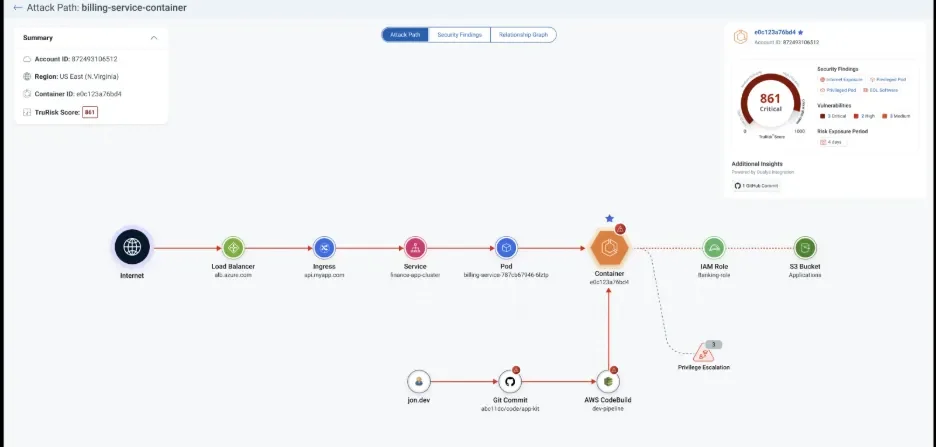
Attack Path Analysis: Visualizes toxic combinations from cloud to container, mapping the blast radius to crown jewel assets.
Generic Scoring: Analysts rank Aqua lower for prioritization because it relies heavily on standard CVSS scores and runtime context, lacking financial risk quantification.
High Alert Volume: Susceptible to high false-positive rates typical of open-source scanners like Trivy which don’t factor in asset or business context.
Limited Attack Paths: Often misses cloud-to-container attack paths, focusing only on code-to-container vectors.
Business Impact Scoring: Correlates 25+ threat feeds to translate vulnerabilities into financial and operational risk.
Six Sigma Accuracy: Delivers 99.99966% accuracy, validating exploitable exposures to virtually eliminate false positives.
Attack Path Analysis: Visualizes toxic combinations from cloud to container, mapping the blast radius to crown jewel assets.
Generic Scoring: Analysts rank Aqua lower for prioritization because it relies heavily on standard CVSS scores and runtime context, lacking financial risk quantification.
High Alert Volume: Susceptible to high false-positive rates typical of open-source scanners like Trivy which don’t factor in asset or business context.
Limited Attack Paths: Often misses cloud-to-container attack paths, focusing only on code-to-container vectors.
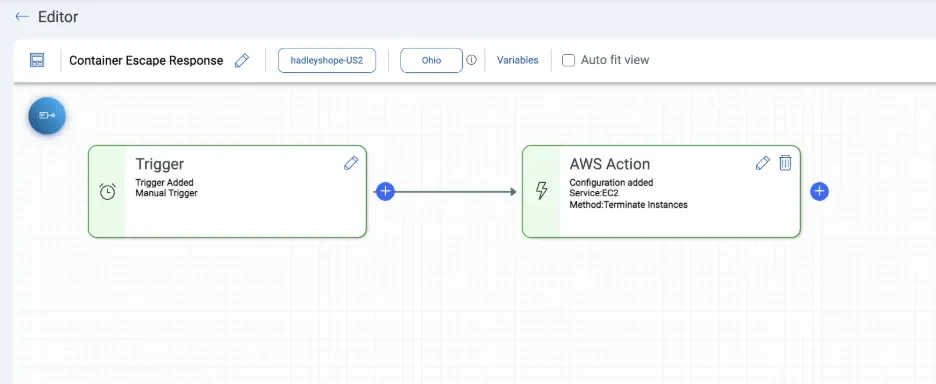
TotalCloud’s QFlow™ enables remediation through no-code/low-code workflows, from instant patching to quarantine to remove human bottlenecks. Qualys fixes the root cause, whereas Aqua primarily blocks the attack.
Autonomous no-code remediation at scale: with 300+ workflows and ITSM integration
AI-driven patching and runtime validation: fixes real exploitable vulnerabilities, not noise
Code-to-cloud risk correlation: eliminates attack paths across applications, workloads, and identities
Virtual Patching Focus: Emphasizes blocking attacks at runtime (virtual patching) rather than fixing the underlying software vulnerability.
Manual Effort: Analysts highlight that actual patching often requires manual effort or external tools, leaving technical debt in the environment.
Disjointed Workflows: While integrated into CI/CD, remediation workflows for running assets can be disconnected from the detection engine.
Autonomous no-code remediation at scale: with 300+ workflows and ITSM integration
AI-driven patching and runtime validation: fixes real exploitable vulnerabilities, not noise
Code-to-cloud risk correlation: eliminates attack paths across applications, workloads, and identities
Virtual Patching Focus: Emphasizes blocking attacks at runtime (virtual patching) rather than fixing the underlying software vulnerability.
Manual Effort: Analysts highlight that actual patching often requires manual effort or external tools, leaving technical debt in the environment.
Disjointed Workflows: While integrated into CI/CD, remediation workflows for running assets can be disconnected from the detection engine.
Takeaway: For Mythos Glasswing-style threats, detection alone is insufficient. Organizations must validate exploitability and remediate risks at the same speed as attackers operate.
Qualys TotalCloud embeds risk-based security directly into the SDLC. By applying TruRisk scoring across SCA, IaC, images, and runtime, developers see what is truly exploitable—not just long lists of vulnerabilities.
Deep CI/CD Integration: Native plugins for Jenkins, GitHub, GitLab, Azure DevOps, and more to fail non-compliant image builds and insecure code.
Building DevSecOps Harmony: Qualys enables alignment between developers and SecOps by providing context-driven findings. Findings are grouped by actionable remediation and TruRisk scoring which enriches CVEs with runtime and business context developers need for prioritization.
Vulnerability Traceability: Traces runtime vulnerabilities back to the specific application or base layer, assigning ownership based on dynamic tags.
Limited Secrets Detection: While supported, secrets scanning can miss key checks compared to Qualys’ comprehensive library.
Plugin Limitations: Full support exists, but limitations on CI/CD plugins can create friction in complex pipelines.
Fragmented Context: Can lack the "code-to-cloud" context that links a runtime threat back to the specific build artifact and developer owner effectively.
Deep CI/CD Integration: Native plugins for Jenkins, GitHub, GitLab, Azure DevOps, and more to fail non-compliant image builds and insecure code.
Building DevSecOps Harmony: Qualys enables alignment between developers and SecOps by providing context-driven findings. Findings are grouped by actionable remediation and TruRisk scoring which enriches CVEs with runtime and business context developers need for prioritization.
Vulnerability Traceability: Traces runtime vulnerabilities back to the specific application or base layer, assigning ownership based on dynamic tags.
Limited Secrets Detection: While supported, secrets scanning can miss key checks compared to Qualys’ comprehensive library.
Plugin Limitations: Full support exists, but limitations on CI/CD plugins can create friction in complex pipelines.
Fragmented Context: Can lack the "code-to-cloud" context that links a runtime threat back to the specific build artifact and developer owner effectively.
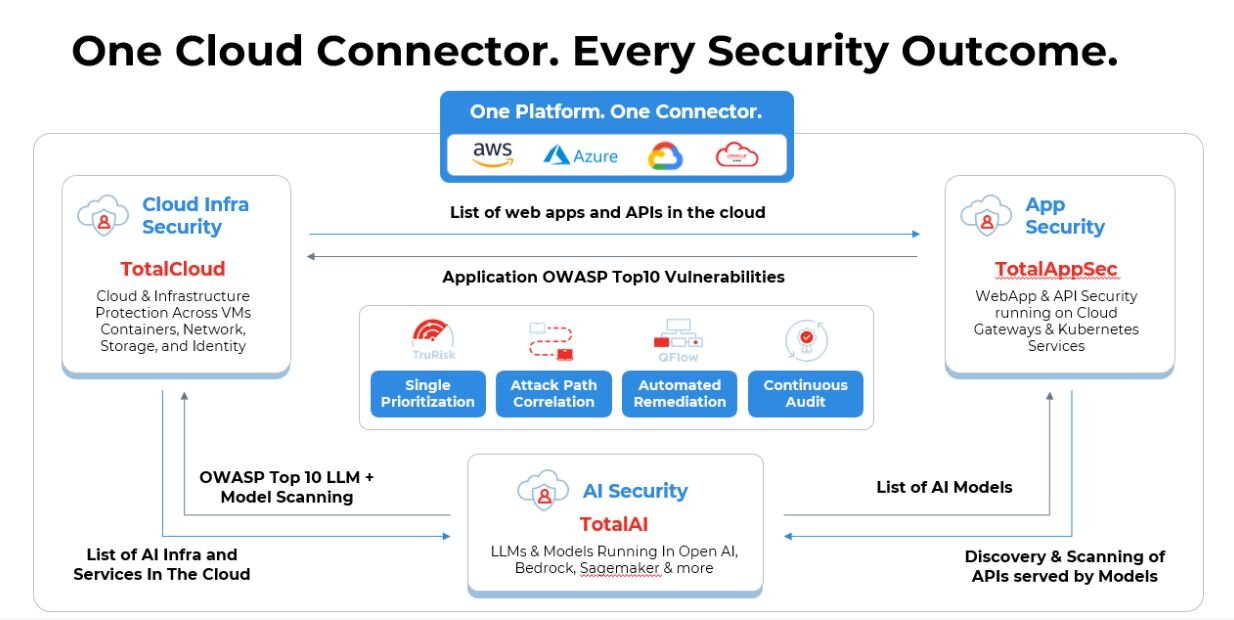
Qualys TotalCloud utilizes Deep Learning AI to detect known and unknown threats in real-time, going beyond simple signature-based detection. Combining this with Qualys TotalAppSec and TotalAI ensures dynamic AI/LLM, application, and API security with one cloud connector in a single, unified platform.
Deep Learning AI: Detects malware, ransomware, and zero-day threats in real-time without relying on static signatures.
eBPF Sensors: Lightweight, kernel-safe sensors provide file integrity monitoring (FIM) and proactive threat detection for containers and hosts.
Comprehensive Drift Detection: Monitors drift across packages, files, processes, and network events to flag anomalies instantly.
Signature Reliance: Malware detection is often limited to static analysis and YARA signatures, missing novel zero-day threats.
Limited FIM: File Integrity Monitoring is often supported only for hosts, missing granular container-level visibility.
Focus on Immutability: Strong on preventing drift, but less effective at detecting complex, multi-stage attacks that evade drift controls.
Deep Learning AI: Detects malware, ransomware, and zero-day threats in real-time without relying on static signatures.
eBPF Sensors: Lightweight, kernel-safe sensors provide file integrity monitoring (FIM) and proactive threat detection for containers and hosts.
Comprehensive Drift Detection: Monitors drift across packages, files, processes, and network events to flag anomalies instantly.
Signature Reliance: Malware detection is often limited to static analysis and YARA signatures, missing novel zero-day threats.
Limited FIM: File Integrity Monitoring is often supported only for hosts, missing granular container-level visibility.
Focus on Immutability: Strong on preventing drift, but less effective at detecting complex, multi-stage attacks that evade drift controls.
Regulated industries need real, sustainable audit readiness. Qualys streamlines mapping to 40+ global mandates while collecting evidence continuously to eliminate audit fatigue and manual work.
Holistic Policy Coverage: Out-of-the-box controls for PCI DSS 4.0, NIST 800-53, HIPAA, GDPR, and more across the entire hybrid estate.
Continuous Auditing: Automated, real-time evidence collection and reporting reduces audit prep time by up to 85%.
Unified Compliance: Single view for cloud, container, and on-prem compliance, eliminating the need to aggregate data from multiple tools.
Niche Scope: Analysts rate Aqua lower on enterprise compliance as checks are largely limited to cloud-native configurations and container benchmarks.
Manual Correlation: Requires manual effort to correlate evidence across hybrid assets for broader enterprise audits.
Limited Frameworks: Lacks the breadth of out-of-the-box policy support for complex global regulations outside of cloud-native scopes.
Holistic Policy Coverage: Out-of-the-box controls for PCI DSS 4.0, NIST 800-53, HIPAA, GDPR, and more across the entire hybrid estate.
Continuous Auditing: Automated, real-time evidence collection and reporting reduces audit prep time by up to 85%.
Unified Compliance: Single view for cloud, container, and on-prem compliance, eliminating the need to aggregate data from multiple tools.
Niche Scope: Analysts rate Aqua lower on enterprise compliance as checks are largely limited to cloud-native configurations and container benchmarks.
Manual Correlation: Requires manual effort to correlate evidence across hybrid assets for broader enterprise audits.
Limited Frameworks: Lacks the breadth of out-of-the-box policy support for complex global regulations outside of cloud-native scopes.
Detailed Capability Breakdown
Deployment and Platform Architecture
Utilizes a flexible, unified architecture with FlexScan™ (Agentless, Agent, Network).
Deploys rapidly with a single, lightweight agent for VM, EDR, FIM, and Compliance.
Scales effortlessly to process trillions of security events annually.
Unified RBAC that aligns to asset tags for proper business unit-level reporting, risk management, and enforcement.
Seamless SSO Management and OIDC Integration configurability with OAuth for self-service access.
Relies on complex deployment of enforcers, sidecars, and daemon sets.
Architecture optimized for Kubernetes but scales poorly across legacy IT.
Requires significant maintenance to manage components across clusters.
Overhead in configuring SSO with limited supportability and lack of native OIDC configurability.
Utilizes a flexible, unified architecture with FlexScan™ (Agentless, Agent, Network).
Deploys rapidly with a single, lightweight agent for VM, EDR, FIM, and Compliance.
Scales effortlessly to process trillions of security events annually.
Unified RBAC that aligns to asset tags for proper business unit-level reporting, risk management, and enforcement.
Seamless SSO Management and OIDC Integration configurability with OAuth for self-service access.
Relies on complex deployment of enforcers, sidecars, and daemon sets.
Architecture optimized for Kubernetes but scales poorly across legacy IT.
Requires significant maintenance to manage components across clusters.
Overhead in configuring SSO with limited supportability and lack of native OIDC configurability.
Risk-Minded Runtime Protection
Uses Deep Learning AI to catch novel zero-day malware and malicious connections.
Integrates runtime protection with eBPF for deep visibility into process, network, and file events.
Prioritizes threats using business impact and exploitability context, not just severity.
Focuses on blocking unauthorized processes and enforcing immutability.
Strong drift prevention but limited detection of complex lateral movement.
Malware detection primarily static/signature-based.
Uses Deep Learning AI to catch novel zero-day malware and malicious connections.
Integrates runtime protection with eBPF for deep visibility into process, network, and file events.
Prioritizes threats using business impact and exploitability context, not just severity.
Focuses on blocking unauthorized processes and enforcing immutability.
Strong drift prevention but limited detection of complex lateral movement.
Malware detection primarily static/signature-based.
Takeaway: For Mythos Glasswing-style threats, detection alone is insufficient. Organizations must validate exploitability and remediate risks at the same speed as attackers operate.
.