Qualys Threat Research Unit 2025
The Broken Physics
of Remediation
Adversaries now weaponize vulnerabilities faster than patches exist.
The operational model of remediation is structurally broken.
Based on 1 billion+ CISA KEV remediation records · 10,000+ organizations · 2022-2025

1 The Core Asymmetry

Attackers exploit in hours. Defenders remediate in weeks.
This is not a process gap — it is a physics gap.
Avg Time-to-Exploit
-1 day
Days exploits arrive before patches do.
Defender Avg Window (AWE)
21 days
Days to close a critical vulnerability.
Defenders Lose
88%
Of weaponized CVEs patched slower than exploited.
Still Open at Day 7 (2025)
63%
Critical KEV vulns in 2025 — up from 56% in 2022.

2 Volume Explosion & The Human Ceiling

KEV vulnerability events closed per year grew 6.5× in four years — from 73M in 2022 to 473M in 2025. Teams worked harder and closed more tickets, yet the percentage of critical exposures still open at Day 7 got worse.
CISA KEV events closed per year (across 10,000+ orgs)
2022
73M
Baseline

2023

123M

+1.7x

2024

301M

+4.1x

2025

473M

+6.5x

2022
73M
Baseline

2023

123M

+1.7x

2024

301M

+4.1x

2025

473M

+6.5x

The Human Ceiling

63% of critical KEV vulnerabilities were still open at Day 7 in 2025 — up from 56% in 2022. You cannot scale a workforce 6.5× to match a 6.5× increase in exploitable risk. The constraint is not effort. It is the operational model itself.

Open at Day 7 — 2022
56%
Of critical KEV vulnerabilities still unpatched

Open at Day 7 — 2025

63%
Worse despite 6.5x more events closed

3 The Zero-Day Zone & The Manual Tax

50%
of high-profile CVEs were weaponized before disclosure.
Win Kernel EoP (CVE-2024-21338)
-182 Days
Avg close: -120 days
WinRAR RCE (CVE-2023-38831)
-110 Days
Avg close: -140 days
Cisco IOS XE
-30 Days
Avg close: 263 days
ActiveMQ RCE
-15 Days
Avg close: 459 days
Spring4Shell (CVE-2022-22965)
+2 Days

Avg close: 266 days

WebLogic RCE (CVE-2023-21839)
+71 Days
Avg close: 266 days
50%
of high-profile CVEs were weaponized before disclosure.
Win Kernel EoP
(CVE-2024-21338)
-182 Days
Avg close: -120 days
WinRAR RCE
(CVE-2023-38831)
-110 Days
Avg close: -140 days
Cisco IOS XE
-30 Days
Avg close: 263 days
ActiveMQ RCE
-15 Days
Avg close: 459 days
Spring4Shell
(CVE-2022-22965)
+2 Days

Avg close: 266 days

WebLogic RCE
(CVE-2023-21839)
+71 Days
Avg close: 266 days
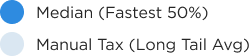
The Manual Tax: median vs. average days to close

Spring4Shell

49 Days

266 Days

WebLogic RCE

125 Days

242 Days

F5 BIG-IP

82 Days

188 Days

Jenkins CLI

63 Days

146 Days

Veeam Creds

116 Days

196 Days

SpoolFool

13 Days

62 Days

+217 Days (5.4x)
49 Days
Spring4Shell

266 Days

125 Days
WebLogic RCE

242 Days

82 Days
F5 BIG-IP

188 Days

13 Days
Jenkins CLI

146 Days

116 Days
Veeam Creds

196 Days

13 Days
SpoolFool

62 Days

4 Risk Mass:
Measuring Cumulative Exposure

Risk Mass = vulnerable assets × days exposed. A CVE patched in 1 day and a CVE patched in 180 days both register as "remediated" — but one absorbed 180× more exploitable opportunity.
33,000
Exposure-Days From Follina Alone
Blind Spot
Day -30 to Day 0

~12,000 Exposure-Days 36% of Total Risk Mass

No patch existed. Nation-state actors (TA413) already exploiting. 100% of assets vulnerable. Zero remediation possible.
Sprint
Day 0 to Day 23
~6,200 Exposure-Days 19% of Total Risk Mass
Patch released. Remediation begins. By Day 7: 79% still unpatched. By Day 14: 57%. The phase that looks good on dashboards.
Long Tail
Day 23 to Day 364+
~14,600 Exposure-Days 44% of Total Risk Mass
Ransomware groups (Cl0p, LockBit 3.0) exploit the same CVE. At Day 55 avg close: 90 assets still open. At 1 year: 15 remain.
The dashboard measures Sprint (19%). Risk Mass measures everything it misses — the Blind Spot + Long Tail (81%).

5 The Sub-1% Reality & The Confirmation Gap

0.74%
of 48,172 CVEs disclosed in 2025 were remotely exploitable, actively concept weaponized, and backed by working proof-of- code.
YearDisclosedWeaponizedRate

2022

25,043

131

0.52%

2023

28,816

185

0.64%

2024

39,964

218

0.55%

2025

48,172

357

0.74%

The Confirmation Gap
Even after prioritization narrows 48,172 CVEs to 357 — a second filter problem remains:
Prioritization Asks:

What is theoretically dangerous?

Confirmation Asks:

Is this actually exploitable in my environment, right now?
Compensating controls — WAF rules, network segmentation, EDR policies — may already mitigate a high-priority CVE. Confirmation testing reveals this, freeing cycles for genuinely exploitable gaps.
Prioritization reduces the haystack. Confirmation finds which needles are real.

6 Operationalize or Fail:
The Risk Operations Center

The scan-and-report model was built for lower volume, longer timelines, and acceptable human latency. That era is over. A ROC is an end-to-end pipeline that executes the full remediation lifecycle at machine speed.

1

Embedded
Intelligence
Threat intel arrives as machine-readable decision logic — not a report. The system auto-correlates CVEs against asset inventory, cross-references threat actor activity, assesses existing controls, and determines action priority in seconds rather than days.

2

Active
Confirmation
Move from version-based detection to exploit-based validation. TruConfirm tests whether the full exploit chain succeeds in the production environment — yielding a dramatically compressed confirmed target list. Resources freed from ghost risk redirect to validated exposure.

3

Autonomous
Action
Policy-driven remediation on endpoints. Compensating controls — virtual patching, network containment, host isolation — for infrastructure where patch cycles span months. Humans govern the policies; they no longer execute every action.
The only variable still within the defender’s control is the speed and consistency of the remediation response. Operationalize it completely.
Source: Qualys TRU — The Broken Physics of Remediation (2026) 1B+ CISA KEV records • 10,000+ orgs • 2022-2025

© 2026 Qualys, Inc. All rights reserved.